




Inward Casement Windows Applications in Commercial Buildings
With its outstanding adaptability for commercial applications, inward casement windows are a clever fenestration option that open toward the inside of the structure. These windows perform very well in contemporary retail establishments, office complexes, and institutional buildings where energy efficiency, safety, and ease of maintenance are critical factors. Their inward-opening mechanism guarantees adherence to safety norms and commercial building codes in a variety of architectural styles while offering excellent control over ventilation patterns.

Understanding Inward Casement Windows in Commercial Buildings
Operational Mechanics and Design Principles
A clear practical benefit over conventional window systems is provided by inward casement windows, which function via a hinged mechanism that allows the sash to swing inside. Building managers may easily control airflow patterns across commercial buildings thanks to its interior-opening design, which makes precise ventilation management possible. Strong hardware systems that can tolerate repeated usage in busy commercial settings are essential to the operating mechanism. These windows' architecture improves security and thermal performance by using multi-point locking mechanisms and cutting-edge weatherstripping technology. The complete perimeter seal formed when closed, in contrast to sliding or double-hung alternatives, offers outstanding protection against air penetration and greatly improves HVAC efficiency in big commercial buildings.
Enhanced Safety and Maintenance Access
Windows on commercial buildings are often located at high heights, which makes outside upkeep difficult and expensive. Because inward casement windows provide full inside access for cleaning and maintenance, they reduce a number of safety problems. These windows may be serviced by building maintenance workers without the need for specialist external access equipment, which lowers operating expenses and safety hazards. Regular inspections and repairs also benefit greatly from the interior accessibility. Facilities managers do not need to coordinate complicated outdoor access processes in order to inspect weatherstripping, hardware components, and glazing systems. Building operating efficiency is increased and maintenance downtime is decreased as a result of this accessibility.
Architectural Integration and Aesthetic Flexibility
Modern commercial architecture requires fenestration solutions that are both functionally excellent and compliment a variety of architectural aspects. With its ability to accommodate a variety of frame materials, such as aluminum, uPVC, and composite systems, inward casement windows provide exceptional architectural versatility. Their uncluttered glass sections and simple forms allow for unhindered views of the outside while optimizing natural light penetration. Energy efficiency and safety compliance are improved by compatibility with double glazing and tempered glass systems. These windows may be tailored to meet certain architectural specifications, including unique colors, finishes, and hardware choices that complement corporate branding campaigns, and they blend in seamlessly with curtain wall systems.
Comparing Inward Casement Windows with Alternative Window Solutions
Security and Space Optimization Advantages
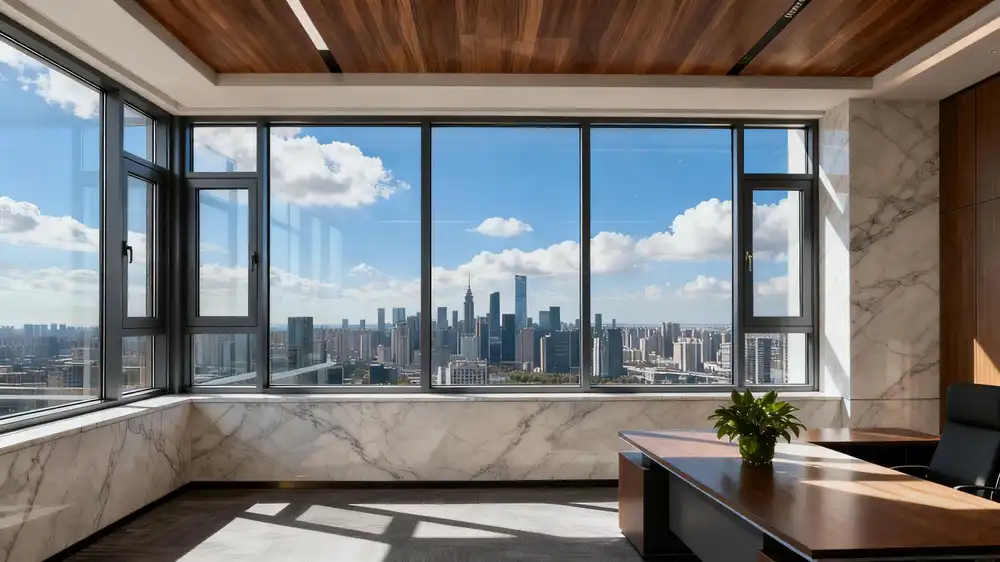
Commercial building design must take security into account, and inward casement windows have intrinsic benefits over outward-opening options. Since possible attackers cannot reach the hinges or use leverage from outside the structure, the interior-opening mechanism greatly increases the difficulty of forcible entrance. In urban settings, this security improvement is especially beneficial for buildings and commercial areas on the bottom level. In commercial environments, where outside architectural features must adhere to setback standards and pedestrian safety laws, space efficiency becomes crucial. Concerns like projecting sashes obstructing walkways, fire escape routes, or other buildings are eliminated with inward casement windows. Because of this feature, they are perfect for structures in crowded metropolitan areas or with little external clearance.
Performance Comparison with Alternative Systems
Inward casement windows exhibit better air infiltration ratings and thermal efficiency when compared to sliding windows, awning windows, or double-hung systems. Compared to sliding seals used in horizontal sliding systems, the compression seal formed when closed offers superior weatherproofing. Improved soundproofing performance, which is crucial for commercial buildings in loud urban settings, results from this increased sealing capacity. Because of its excellent sealing qualities and compatibility with high-performance glazing systems, inward casement windows often perform better than many other systems, according to energy conservation studies. Thermal barriers are produced by achieving genuine multi-point contact around the whole perimeter, which lowers heat transmission and increases HVAC system efficiency.
Total Cost of Ownership Considerations
Beyond the initial installation costs, procurement decision-makers need to consider long-term operating costs. Inward casement windows often provide a positive total cost of ownership via lower maintenance costs and energy savings, while initial prices may vary based on specifications and customisation needs. Better thermal efficiency results in continuous energy cost savings, and greater interior access for maintenance lowers service costs. Compared to certain alternative window types, the operational lifetime of high-quality inward casement systems is extended by their durability, especially when such systems are made using sophisticated hardware components and precise extrusion methods. For facilities managers and owners of commercial buildings, this durability and reduced maintenance needs provide strong financial benefits.
Selecting the Best Inward Casement Windows for Commercial Procurement
Material Selection and Performance Specifications
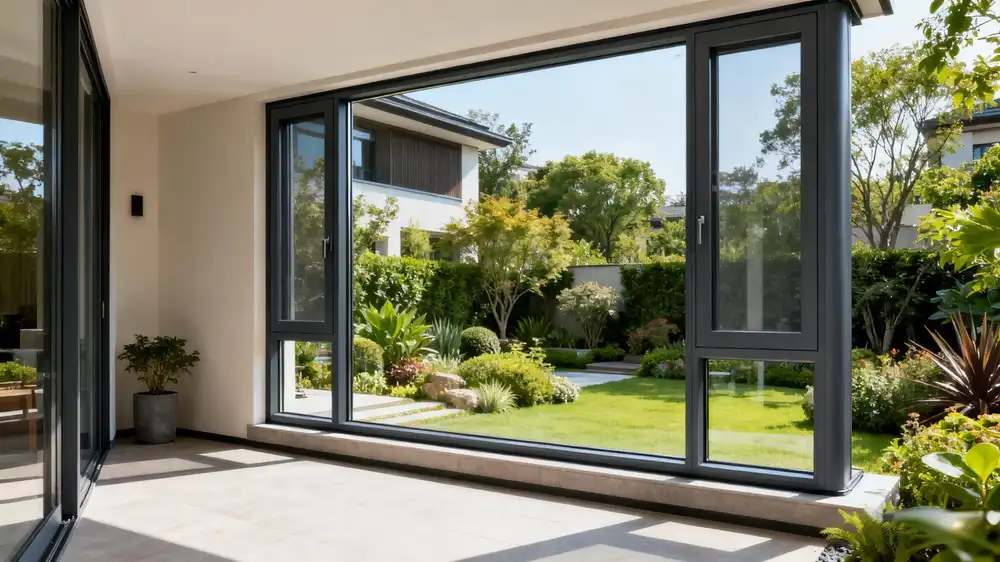
Commercial procurement necessitates a thorough assessment of frame materials according to environmental factors and building-specific needs. Aluminum frames are perfect for high-rise applications and coastal areas because of their remarkable strength-to-weight ratios and resistance to corrosion. In contemporary aluminum systems, heat conductivity issues are resolved while preserving structural integrity thanks to thermal break technology. Because of their superior thermal performance and low maintenance needs, uPVC systems are appealing for structures where operational effectiveness is a top concern. Though they may have limits in extremely large commercial applications where structural requirements surpass uPVC's capabilities, these systems provide greater insulating qualities and resilience to environmental deterioration.
Here are the key material considerations for commercial applications:
- Aluminum Systems: Provide exceptional durability and weather resistance with customizable finishes that maintain appearance over extended periods. Advanced thermal break technology ensures energy efficiency while meeting structural requirements for large commercial installations.
- uPVC Solutions: Deliver outstanding thermal performance with minimal maintenance requirements, offering cost-effective solutions for mid-rise commercial buildings and institutional applications where energy efficiency is prioritized.
- Composite Options: Combine the benefits of multiple materials, providing enhanced thermal performance with improved structural capabilities suitable for specialized commercial applications requiring both efficiency and durability.
These material options enable architects and procurement professionals to select systems that balance performance requirements with budget considerations while ensuring compliance with commercial building codes.
Customization Capabilities and Design Flexibility
Specialized configurations that ordinary window products cannot provide are often needed for modern commercial buildings. Prominent manufacturers provide a wide range of customisation services, such as unique hardware choices, specific glass alternatives, and non-standard size. This adaptability guarantees smooth incorporation into intricate architectural designs while upholding performance requirements. Windows may meet certain design themes or business branding needs thanks to custom color matching and finish choices. Precision color matching is made possible by powder coating methods, which also provide long-lasting finishes that are resistant to fading and environmental deterioration. For commercial applications where visual consistency is crucial, these customization options prove indispensable.
Procurement Channels and Support Services
Comprehensive support services and dependable supplier connections are essential for successful commercial procurement. Reputable manufacturers provide specialized commercial support teams that can synchronize supply dates with construction timeframes and comprehend the intricacies of large-scale projects. Online procurement solutions provide project management features for monitoring several installations and expedite purchasing procedures. Optimal performance and correct execution are guaranteed by expert installation assistance. Skilled installation crews are aware of the specifications for commercial buildings and are able to work with general contractors to minimize disturbances while constructing or renovating. This assistance is crucial for keeping project timelines on track and guaranteeing high-quality results.
Installation, Maintenance, and Troubleshooting Best Practices

Professional Installation Requirements
The cornerstone of commercial inward casement windows' long-term functionality is proper installation. To guarantee the best fit and performance, the installation procedure starts with accurate measurement and confirmation of the preliminary opening dimensions. In order to accomplish correct alignment and weatherproofing that satisfies commercial building requirements, professional installers use certain equipment and procedures. Establishing adequate drainage planes, installing flashing systems, and making sure structural attachment points can withstand environmental pressures and operating loads are all crucial installation components. To maintain overall building performance requirements, air sealing and thermal bridging must be carefully considered when integrating with building envelope systems.
Maintenance Protocols and Preventive Care
Structured maintenance procedures help commercial buildings maintain window performance and increase operating longevity. To avoid water buildup and possible damage, regular maintenance procedures should include cleaning drainage systems, lubricating moving hardware parts, and inspecting weatherstripping systems. Because inward casement windows are more accessible, regular maintenance may be carried out by building workers without the need for specialist equipment. While yearly expert service guarantees peak performance and finds any warranty-covered faults that need manufacturer care, quarterly checks may spot any problems before they become expensive repairs.
Diagnostic Procedures and Problem Resolution
Hardware wear, alignment concerns that might arise over time, and seal degradation are common operational challenges with commercial casement windows. Proactive fixes that avert more significant issues are made possible by early discovery via thorough examination. Precision measuring instruments to detect alignment problems and thermal imaging to detect seal failures are examples of modern diagnostic approaches. To guarantee smooth functioning and avoid premature wear, hardware maintenance include routinely lubricating hinges, locks, and operators. Having established ties with competent service providers guarantees a prompt response and little interruption to building operations when issues do arise. Facility managers are better able to decide between repair and replacement choices when they are aware of warranty coverage and servicing processes.
Case Studies and Application Scenarios in Commercial Buildings
Office Complex Implementations
In order to provide pleasant and effective work environments, modern office buildings are depending more and more on natural light and ventilation. A recent installation in a 12-story office building in the heart of Seattle showed how well inward casement windows work to meet energy efficiency targets and improve tenant happiness. Custom aluminum frames with low-E glass were ordered for the project, which resulted in an 18% reduction in HVAC loads over the old window system. In this application, the interior-opening design was very useful since it made it possible for maintenance personnel to securely service every window from within the structure. This feature improved safety compliance and cut yearly maintenance expenses by around 35% by doing away with the requirement for external lifts or scaffolding.
Retail Environment Applications
Among the particular difficulties faced by retail facilities are security issues, aesthetic demands, and the necessity for adaptable environmental management. The use of inward casement windows in a prominent retail chain's flagship store demonstrated how these many demands may be met while preserving the sleek, contemporary design that is crucial to the customer experience. The project combined customized glass that allowed for the best possible natural light without damaging UV rays that may damage items with custom-colored frames that matched business identity. High-value retail settings were further protected by the improved security measures of the inward-opening design.
Architectural Customization and Branding Integration
Window solutions that go well with certain architectural concepts or corporate branding initiatives are often needed for commercial buildings. Because of its adaptability, contemporary inward casement systems may be highly customized with unique hardware choices, specific coatings, and interaction with building automation systems. The possibilities of conventional casement systems are being expanded by recent advancements in smart window technology. While smart glass alternatives provide dynamic privacy and sun control capabilities that improve building efficiency, automated operators may interact with building management systems to deliver regulated ventilation based on internal air quality sensors.
HAOLV: Your Trusted Partner for Commercial Inward Casement Windows
HAOLV Building Materials brings over 18 years of manufacturing expertise to the commercial fenestration market, specializing in high-performance aluminum and uPVC window systems designed for demanding commercial applications. Our advanced manufacturing facilities feature state-of-the-art extrusion lines, precision CNC cutting equipment, and automated assembly systems that ensure consistent quality and efficient production for both standard and custom commercial projects. Our partnership with CONCH Materials provides access to premium-grade materials that meet the most stringent commercial building requirements. This supply chain advantage, combined with our comprehensive quality control systems, ensures that every inward casement window meets international standards for durability, performance, and aesthetic excellence. We offer complete customization capabilities that address the unique requirements of commercial projects. From non-standard sizing and specialized glazing options to custom colors and finishes, our engineering team works closely with architects and procurement professionals to develop solutions that seamlessly integrate into complex commercial designs while maintaining optimal performance characteristics.
Here are the core advantages that set HAOLV apart in commercial window manufacturing:
- Advanced Manufacturing Technology: Our precision CNC machining centers and automated welding systems ensure consistent quality and exact tolerances that meet commercial building requirements for performance and durability.
- Comprehensive Customization Services: From specialized sizing to custom finishes, our engineering team provides complete design flexibility while maintaining structural integrity and performance standards essential for commercial applications.
- Global Support Network: With products exported to over 30 countries and 24-hour customer service, we provide reliable support throughout the project lifecycle from initial consultation through long-term warranty service.
- Quality Assurance Systems: ISO-certified quality management ensures every product meets international standards, while comprehensive testing protocols verify performance characteristics essential for commercial building applications.
These capabilities enable us to serve as a reliable inward casement windows supplier for commercial projects of any scale, providing the technical expertise and manufacturing capacity required for successful outcomes. Our efficient logistics network ensures timely delivery to commercial construction sites across the United States, while our technical support team provides comprehensive assistance from initial specification through installation and ongoing maintenance. This complete service approach helps construction professionals manage complex projects while ensuring optimal window performance and longevity.
Conclusion
Inward casement windows offer compelling advantages for commercial building applications, combining superior energy efficiency, enhanced security, and simplified maintenance access in a versatile design platform. Their interior-opening mechanism addresses key commercial building challenges including safety compliance, space optimization, and operational efficiency while providing the aesthetic flexibility required for modern architectural designs. The growing emphasis on sustainable building practices and energy efficiency makes these windows an increasingly attractive choice for commercial developers and building owners seeking long-term value and performance.
FAQ
How do inward casement windows contribute to commercial energy savings?
Inward casement windows achieve superior energy performance through their compression sealing system, which creates airtight contact around the entire window perimeter when closed. This enhanced sealing capability significantly reduces air infiltration compared to sliding or double-hung systems, improving HVAC efficiency and reducing energy costs. The compatibility with high-performance glazing systems, including low-E coatings and gas fills, further enhances thermal performance essential for commercial building energy efficiency goals.
Are inward casement windows suitable for narrow commercial building layouts?
Inward casement windows excel in constrained commercial spaces because they eliminate exterior protrusion concerns that can interfere with pedestrian walkways, fire escape routes, or adjacent structures. The interior-opening design provides excellent space utilization for urban commercial buildings where exterior clearance is limited, while still offering full ventilation capability and easy maintenance access from inside the building.
What warranty terms should commercial buyers expect from reputable suppliers?
Quality commercial window suppliers typically provide comprehensive warranty coverage including 10-20 year structural warranties on frames and hardware, along with separate glazing warranties that may extend 15-25 years depending on the glass specifications. Professional suppliers also offer extended technical support services including installation guidance, maintenance training, and responsive service support throughout the warranty period, ensuring long-term performance and customer satisfaction for commercial installations.
Contact HAOLV for Your Commercial Window Needs

HAOLV Building Materials stands ready to support your next commercial project with premium inward casement windows manufactured to the highest quality standards. Our 18-year manufacturing legacy and partnership with leading material suppliers ensure reliable, high-performance solutions for commercial applications of any scale. Contact our technical team at kristin@haolvwindows.com to discuss your project requirements, request custom specifications, or schedule a comprehensive consultation. As a trusted inward casement windows manufacturer, we provide complete support from initial design through installation and ongoing service to ensure your commercial building achieves optimal performance, efficiency, and aesthetic appeal.
References
1. Commercial Building Energy Performance Standards and Window Efficiency Requirements, American Institute of Architects, 2023.
2. Fenestration Systems in Modern Commercial Architecture: Design and Performance Considerations, Journal of Building Technology, Volume 45, 2023.
3. Maintenance Cost Analysis for Commercial Window Systems: A Comparative Study, Facilities Management Research Institute, 2022.
4. Security Features in Commercial Building Fenestration: Risk Assessment and Design Guidelines, International Building Security Association, 2023.
5. Energy Efficiency in Commercial Buildings: Impact of Window Performance on HVAC Systems, Building Science Corporation, 2022.
6. Sustainable Building Materials and Commercial Window Manufacturing: Environmental Impact Assessment, Green Building Council, 2023.

USER EVALUATE
Here is the customer's evaluation of us