




Aluminum Curved Glass Window How to Achieve Stunning Architectural Curves
Straight lines dominate most architecture, but curved glass windows introduce a level of elegance and sophistication that flat glass cannot match. An aluminum curved glass window combines the strength and slim profiles of aluminum framing with glass that has been bent into a radius. The result is a stunning architectural feature that can transform a mundane facade into a landmark. This comprehensive guide explores the design, manufacturing, applications, and selection criteria for aluminum curved glass windows.

Understanding Aluminum Curved Glass Windows
An aluminum curved glass window features a frame extruded from high-grade aluminum alloy (typically 6063-T5) that follows a curved path, paired with glass that has been heat-bent to match the same radius. The curvature can be gentle (large radius) or tight (small radius), depending on the design requirements. The window can be fixed (non-operating) or designed to open using casement or awning hardware adapted for curved frames.
The aluminum frame is fabricated using specialized techniques. For gentle curves, the profiles can be roll-formed or stretched to the desired radius. For tighter curves, profiles may be sectioned and welded or machined from solid aluminum. Thermal break technology is incorporated to prevent heat transfer, making curved windows energy efficient.
The curved glass is produced through a process called heat bending. Flat glass is heated to approximately 600 to 700 degrees Celsius until it becomes pliable, then it is gently formed over a mold of the desired radius. The glass is then annealed slowly to relieve internal stresses. For curved double glazing, two curved glass panes are manufactured separately and then assembled with a curved spacer bar, creating an insulating glass unit that matches the curve.
Key Advantages of Aluminum Curved Glass Windows
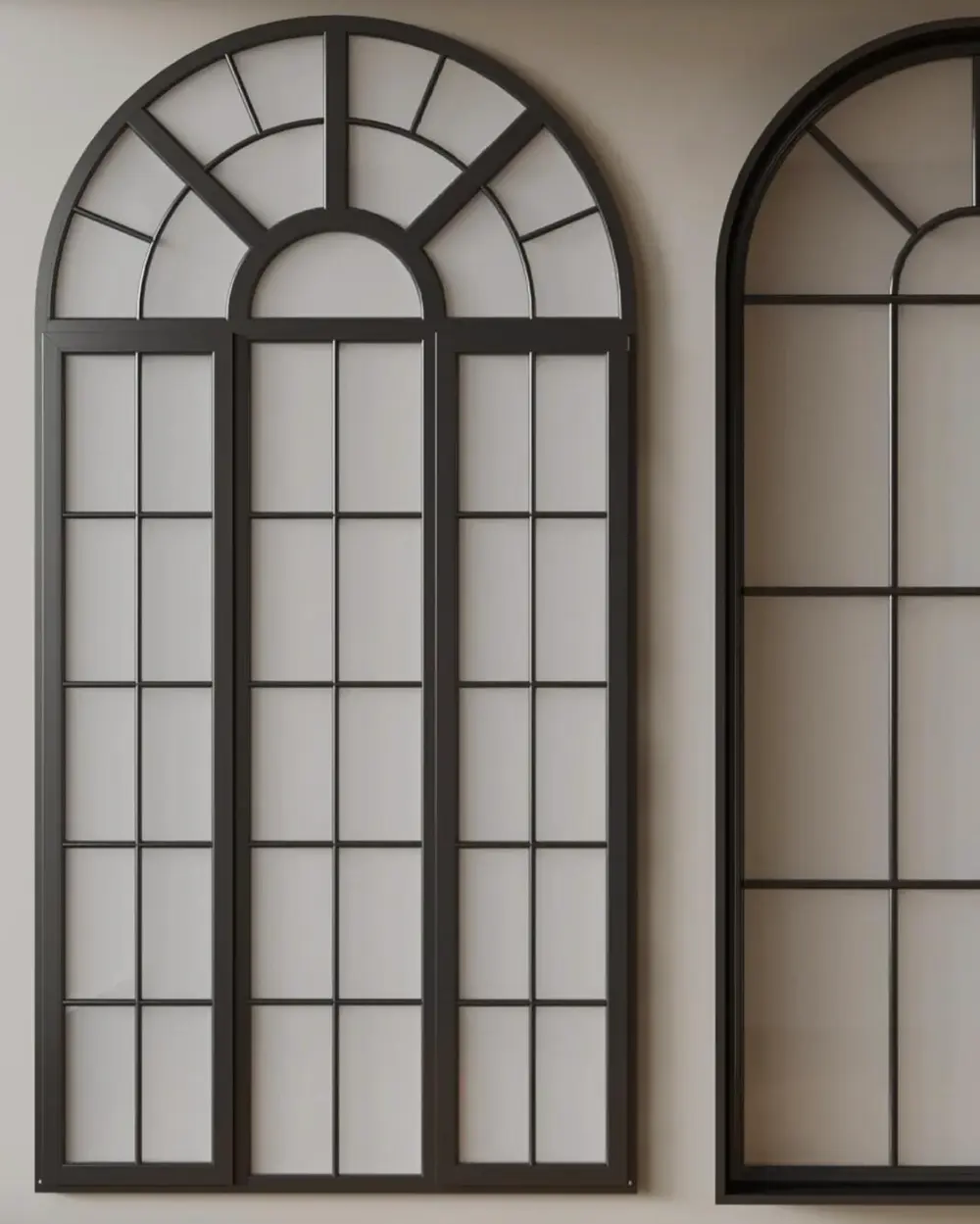
Architectural distinction is the primary reason to specify an aluminum curved glass window. Curves soften the hard lines of modern architecture, create visual flow, and draw the eye. A curved window can serve as a signature feature that defines an entire building.
Uninterrupted panoramic views are possible with curved glass. Unlike flat glass where corners create visual breaks, curved glass follows the natural arc of a building‘s corner, providing seamless views. This is particularly valuable in corner windows, turrets, and cylindrical towers.
Structural strength of curved glass is surprisingly high. The curved shape provides inherent rigidity; curved glass is stronger than flat glass of the same thickness when subjected to uniform loads. The aluminum frame is engineered to match this strength.
Natural light distribution is enhanced by curved glass. The curved surface can direct light deeper into a room or create interesting light patterns. In south-facing installations, curved glass can act as a passive solar collector.
Modern aesthetic appeals to architects and homeowners seeking contemporary designs. Curved glass windows are featured in luxury homes, high-end commercial buildings, museums, and airports.
Durability and low maintenance of aluminum framing apply equally to curved windows. The powder-coated finish resists fading and corrosion. The curved glass, when properly manufactured, is as durable as flat glass.
Design Considerations for Aluminum Curved Glass Windows
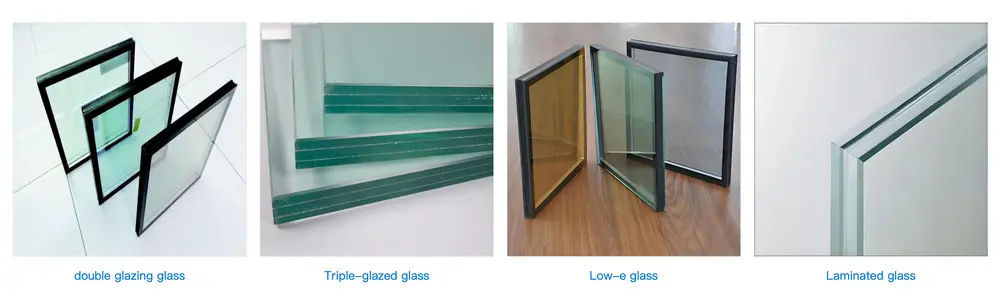
Radius limitations are important. The minimum bending radius for glass depends on the glass thickness. As a general rule, the radius should be at least 200 times the glass thickness. For 6mm glass, the minimum radius is 1,200mm. Tighter radii require specialized bending techniques and may have higher costs and longer lead times.
Glass type selection for curved applications:
Annealed glass: Standard for most curved applications; can be heat-bent successfully.
Tempered glass: Cannot be bent after tempering. Curved tempered glass must be heat-bent first, then tempered. This adds cost.
Laminated glass: Can be curved, but the PVB interlayer must accommodate the bend. Curved laminated glass is excellent for safety and security.
Double glazing: Requires two curved panes with a curved spacer bar. The spacer bar must be custom-bent to match the radius.
Frame fabrication methods:
Roll-forming: For gentle curves (large radius); aluminum profiles are passed through rollers to achieve the curve.
Stretch-forming: Profiles are stretched around a form; good for consistent radii.
Sectioned and welded: For tight curves; profile sections are cut, mitered, and welded together.
CNC machined from solid: For complex or very tight curves; expensive but precise.
Opening capabilities for curved windows are limited. Fixed curved windows are most common. For operable curved windows, casement or awning designs can be adapted, but hardware becomes more complex. Sliding curved windows are rare and technically challenging.
Thermal performance requires thermal break profiles. Aluminum conducts heat, so curved windows must incorporate polyamide thermal breaks to achieve acceptable U-values. Double or triple curved glazing with Low-E coatings further improves energy efficiency.
Applications for Aluminum Curved Glass Windows
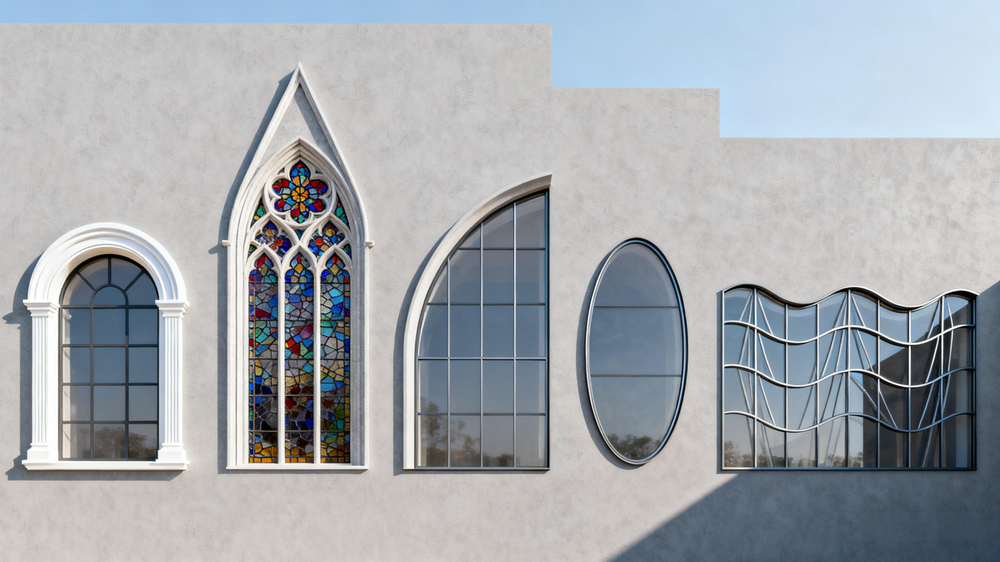
Corner windows in luxury apartments and commercial buildings use curved glass to eliminate the mullion at the corner, creating a seamless wrap-around view.
Turret and tower windows in historic-style homes or civic buildings feature curved glass following the circular plan.
Entrance canopies and curtain walls incorporate curved glass for dramatic entrances.
Atriums and skylights use curved glass to follow the roofline and create sweeping interior spaces.
Retail storefronts use curved glass to create distinctive, memorable facades that attract customers.
Residential bay and bow windows can be designed with gentle curves instead of angled facets for a softer look.
Frequently Asked Questions About Aluminum Curved Glass Windows
Q: How much more expensive are curved glass windows compared to flat?
A: Curved glass windows typically cost 50 to 150 percent more than flat glass equivalents. The cost increase comes from specialized bending of glass, custom frame fabrication, and longer manufacturing time.
Q: What is the minimum radius for curved glass windows?
A: For 6mm glass, the minimum recommended radius is 1,200mm. For 10mm glass, the minimum radius is 2,000mm. Tighter radii are possible but require thicker glass, specialized bending, and significantly higher cost.
Q: Can curved glass windows be double glazed?
A: Yes, but it requires two curved panes and a curved spacer bar. The spacer bar must be custom-bent to match the radius, which adds complexity and cost. Curved double glazing is available from specialized manufacturers.
Q: Do curved glass windows have optical distortion?
A: High-quality heat-bent glass has minimal optical distortion. Poorly bent glass can have visible distortions (waves or ripples). Specify glass from reputable benders and request samples.
Q: How do I clean curved glass windows?
A: Cleaning is similar to flat glass. Use standard glass cleaner and a soft cloth. For exterior cleaning of upper-floor curved windows, professional access equipment may be needed. The curve does not significantly complicate cleaning.
Manufacturing Lead Time and Quality Assurance

Aluminum curved glass windows require longer lead times than standard windows. Expect 6 to 12 weeks from order to delivery, depending on complexity. The glass bending process alone can take 2 to 4 weeks. Custom frame fabrication adds additional time. Always work with manufacturers who have proven experience in curved glass.
Conclusion
Aluminum curved glass windows offer a unique opportunity to create architectural distinction. The combination of strong, slim aluminum framing and heat-bent curved glass produces stunning visual effects that flat glass cannot achieve. While more expensive and complex than standard windows, the dramatic aesthetic impact makes curved glass windows a worthwhile investment for signature projects.
Cooperate With Hunan Haolv Building Materials Co., Ltd.
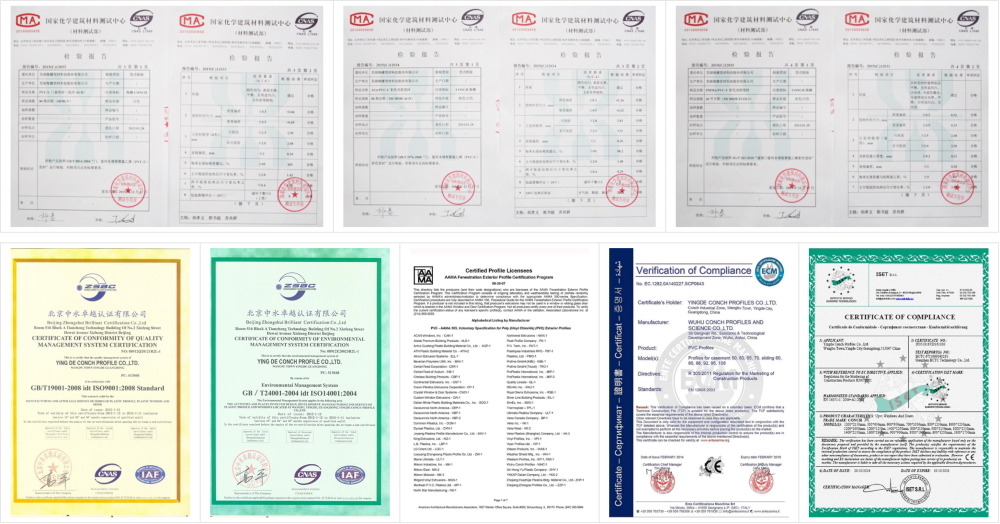
As a leading manufacturer of high-performance aluminum window systems, Hunan Haolv Building Materials Co., Ltd. brings over eighteen years of specialized expertise to the production of aluminum curved glass windows. Our curved windows use premium 6063-T5 aluminum alloy with thermal break technology and heat-bent glass manufactured to precise radii. We offer fixed and operable curved window designs, double glazing options, and any RAL color finish. Every product undergoes rigorous ISO-certified quality management. For detailed quotations, design consultation, or to discuss your specific curved window requirements, please contact us today at kristin@haolvwindows.com.

USER EVALUATE
Here is the customer's evaluation of us