




Aluminum Profiles: Types; Pros and Cons
Are you struggling to find the right building material that combines strength, durability, and versatility for your construction project? Whether you're designing modern windows, architectural facades, or industrial frameworks, selecting suitable Aluminum Profiles can make the difference between a project that merely functions and one that excels. Understanding the various types of Aluminum Profiles, along with their advantages and limitations, is essential for architects, contractors, and building professionals who demand materials that deliver both performance and aesthetic appeal in today's demanding construction environment.

Understanding Aluminum Profiles and Their Fundamental Characteristics
Aluminum Profiles represent extruded aluminum sections engineered into specific cross-sectional shapes designed to meet diverse structural and decorative requirements across multiple industries. The extrusion process involves heating aluminum billets to temperatures below their melting point, then forcing the softened material through precisely designed dies to create profiles with consistent dimensions and specific geometric features. This manufacturing method enables the production of complex hollow sections with internal reinforcement ribs that significantly enhance structural integrity while maintaining the lightweight properties inherent to aluminum alloys. The mechanical properties of Aluminum Profiles depend substantially on the alloy composition and tempering process applied during production. Common architectural-grade alloys such as 6063-T5 typically exhibit tensile strengths ranging from 180 to 200 megapascals, making them suitable for window frames, door systems, and curtain wall applications. For applications requiring enhanced strength characteristics, higher-grade alloys like 6061-T6 can achieve tensile strengths exceeding 290 megapascals, appropriate for structural components subjected to greater mechanical loads. At Haolv Building Materials Co., Ltd., our advanced extrusion lines produce Aluminum Profiles using carefully selected alloys that meet international strength and durability standards, ensuring reliable performance in residential buildings, commercial complexes, and modern office spaces across diverse climate conditions.
The load-bearing capacity of Aluminum Profiles results from intelligent design features including strategically positioned hollow chambers and reinforcement ribs calculated to optimize strength-to-weight ratios. These structural elements distribute applied loads efficiently throughout the profile cross-section, preventing localized stress concentrations that could compromise structural integrity. The thickness of aluminum walls within profiles typically ranges from 1.2 to 1.4 millimeters for standard architectural applications, though specialized industrial profiles may incorporate thicker sections depending on specific load requirements. This thoughtful engineering approach allows Aluminum Profiles to support substantial weights while maintaining the lightweight characteristics that facilitate easier handling, reduced structural loads on supporting elements, and simplified installation procedures.
Material Properties and Performance Advantages
The inherent characteristics of aluminum as a base material contribute significantly to the outstanding performance of Aluminum Profiles in construction applications. Aluminum's natural corrosion resistance stems from the formation of a protective oxide layer that develops spontaneously when the metal surface contacts atmospheric oxygen. This passive film provides continuous protection against environmental degradation without requiring additional maintenance interventions, unlike ferrous materials that demand regular protective treatments to prevent rust formation. The anodizing process commonly applied to Aluminum Profiles further enhances this corrosion resistance while simultaneously improving surface hardness and enabling decorative color finishes that maintain their appearance throughout the product lifespan. Thermal conductivity represents another significant property influencing the performance of Aluminum Profiles in building envelope applications. While aluminum naturally conducts heat efficiently, modern profile designs incorporate thermal break technology using polyamide inserts positioned between interior and exterior aluminum sections. These thermal barriers dramatically reduce heat transfer through window and door frames, contributing to enhanced building energy efficiency by minimizing thermal bridging effects. When combined with high-performance glazing systems and reflective glass capable of insulating against solar heat gain, Aluminum Profiles enable the creation of facade systems that substantially reduce cooling loads in high-rise buildings, generating significant operational cost savings over the building lifecycle.
The lightweight nature of aluminum delivers practical advantages throughout the construction process and building operation. With a density approximately one-third that of steel, Aluminum Profiles substantially reduce the dead load imposed on building structural systems, enabling more efficient foundation designs and simplified handling during installation. Construction crews can manipulate profile sections more easily, reducing labor requirements and accelerating project schedules. This weight advantage becomes particularly valuable in renovation projects where existing structural systems have limited capacity to support additional loads, and in high-rise construction where reducing overall building weight can yield substantial cost savings in structural engineering and foundation requirements.
Major Types of Aluminum Profiles and Their Specific Applications

Aluminum Profiles are manufactured in numerous configurations, each optimized for particular applications and performance requirements. Understanding the distinctions between major profile types enables informed material selection aligned with specific project demands and technical specifications.
Architectural and Construction Profiles
Standard construction profiles designed for building envelope applications represent the largest category of Aluminum Profiles utilized in the construction industry. These profiles feature grooved designs that accommodate various fastening and connection systems, enabling the assembly of window frames, door systems, and curtain wall structures. The groove dimensions and configurations vary according to the modular design system, with common sizes including 30-millimeter, 40-millimeter, 50-millimeter, and 60-millimeter nominal dimensions corresponding to the overall profile width. These architectural Aluminum Profiles typically incorporate multiple chambers within their cross-sections, creating hollow spaces that reduce material usage while maintaining structural performance and providing channels for drainage, thermal breaks, and accessory installation. Casement window and door profiles manufactured by Haolv Building Materials Co., Ltd. exemplify high-quality architectural Aluminum Profiles designed for residential and commercial applications. These profiles integrate precisely engineered geometries that accommodate weatherstripping, locking hardware, and hinge systems while maintaining clean sightlines and aesthetic appeal. The profiles undergo rigorous surface treatment processes including cleaning, chromate conversion coating, and powder coating or anodizing to achieve durable finishes resistant to weathering, ultraviolet degradation, and mechanical abrasion. Our strict quality control system ensures every profile meets ISO-certified standards from raw material selection through final inspection, guaranteeing dimensional accuracy, surface quality, and mechanical properties that exceed industry requirements.
Sliding window and door systems utilize specialized Aluminum Profiles featuring multiple tracks and smooth rolling surfaces designed to support panel weight while facilitating effortless operation. These profiles incorporate sophisticated drainage systems that channel water away from interior spaces, preventing moisture infiltration even during driving rain events. The track geometries are precisely machined to tight tolerances ensuring smooth panel movement throughout the operational life of the installation. Folding or bi-fold door systems represent another specialized category requiring Aluminum Profiles engineered to accommodate complex hinging mechanisms and support substantial panel weights while maintaining alignment throughout repeated opening and closing cycles. These applications demand profiles with enhanced strength characteristics and precisely positioned reinforcement features.
Industrial and Structural Profiles
Industrial Aluminum Profiles designed for manufacturing and automation applications differ significantly from architectural profiles in their design philosophy and connection methodologies. These profiles typically feature T-slot or continuous groove designs that enable the attachment of fasteners, brackets, panels, and accessories at any position along the profile length without requiring welding or specialized machining operations. This modular design approach provides exceptional flexibility for creating custom machine frames, conveyor systems, workstations, and automation equipment that can be easily modified or reconfigured as production requirements evolve. The most common industrial profile sizes include 30×30 millimeter and 60×60 millimeter square sections, though numerous other dimensions and geometric configurations are available to accommodate specific structural and functional requirements. These Aluminum Profiles are manufactured using high-strength aluminum alloys such as A6063-T5, ensuring adequate load-bearing capacity for industrial machinery and equipment support structures. The surface treatment typically consists of clear or white silver anodizing that provides corrosion protection while maintaining the natural appearance of aluminum. Industrial profiles offer significant advantages over traditional welded steel fabrication methods including faster assembly times, easier modifications, lower total system costs, and better compatibility with electrical and pneumatic distribution systems that can be integrated within the profile channels.
Bar profiles represent simplified Aluminum Profiles produced as solid or hollow round, square, or rectangular sections available in various diameters and lengths. Despite their straightforward geometry, these profiles provide excellent strength and versatility for reinforcement applications, support structures, railings, furniture components, and decorative trim installations. The simplicity of bar profiles enables efficient production and competitive pricing while maintaining the fundamental advantages of aluminum including light weight, corrosion resistance, and ease of fabrication through standard metalworking processes. At Haolv Building Materials Co., Ltd., our production capabilities span the complete range of Aluminum Profiles from architectural systems to industrial framing components, supported by advanced CNC machining centers and automatic welding equipment that ensure precise fabrication and consistent quality across all product categories.
Specialized and Decorative Profiles
Specialized Aluminum Profiles address unique functional and aesthetic requirements in applications ranging from LED lighting installations to transportation vehicle construction. LED channel profiles, also known as LED profiles or housings, provide protective enclosures for LED strip lighting while incorporating diffuser lenses that distribute light evenly and eliminate individual diode visibility. These profiles enable professional lighting installations in residential, commercial, and retail environments, offering clean appearances and simplified mounting compared to exposed LED strips. The aluminum construction provides effective heat dissipation that extends LED lifespan while the extruded profile format allows continuous lengths and integrated mounting channels. Transportation applications including automotive, rail, and marine construction utilize Aluminum Profiles extensively to achieve weight reduction objectives that improve fuel efficiency and payload capacity. Vehicle body structures, interior fittings, and structural reinforcements increasingly specify aluminum rather than traditional steel components, capitalizing on aluminum's favorable strength-to-weight ratio and excellent formability. The marine environment particularly benefits from aluminum's outstanding corrosion resistance in saltwater conditions, where steel components require extensive protective treatments and frequent maintenance. Box profiles with square or rectangular closed cross-sections provide high structural efficiency for primary load-bearing applications including roof systems, columns, and chassis components, while L-profiles and U-profiles accommodate specific connection and cladding requirements.
The furniture and exhibition industries employ decorative Aluminum Profiles that combine functional performance with aesthetic appeal. These profiles may incorporate specialized surface finishes including brushed, polished, or wood-grain textures achieved through advanced coating technologies. Custom extrusion capabilities enable the creation of unique profile geometries that address specific design requirements, establishing distinctive product identities while maintaining the practical advantages of aluminum construction. At Haolv Building Materials Co., Ltd., our eighteen years of manufacturing expertise and partnership with CONCH materials supplier ensures access to premium aluminum sources and deep customization capabilities that meet the demanding requirements of architects and designers seeking both performance and aesthetic excellence in their Aluminum Profiles specifications.
Comprehensive Advantages of Aluminum Profiles

Aluminum Profiles offer numerous compelling advantages that explain their widespread adoption across diverse applications and industries. Understanding these benefits enables informed material selection decisions and optimization of project outcomes.
Durability and Longevity
The exceptional durability of Aluminum Profiles stems from aluminum's inherent resistance to corrosion and degradation under environmental exposure. Unlike ferrous metals that oxidize destructively forming rust that progressively weakens material integrity, aluminum forms a stable protective oxide layer immediately upon atmospheric exposure. This passive film continuously regenerates if damaged, providing ongoing protection throughout the service life without requiring regular maintenance interventions. Even relatively thin-walled Aluminum Profiles maintain superior corrosion resistance compared to thicker steel sections, enabling optimized material usage and weight reduction without compromising longevity expectations. Anodizing treatment enhances the natural corrosion resistance of Aluminum Profiles while simultaneously increasing surface hardness and wear resistance. The electrochemical anodizing process converts the aluminum surface into a thick, durable oxide coating that accepts dyes for color customization while maintaining excellent weathering characteristics. Anodized surfaces resist fading, chalking, and degradation from ultraviolet radiation, ensuring consistent appearance throughout decades of service. Powder coating represents an alternative finishing method that applies organic polymer coatings providing both decorative color options and additional environmental protection. High-quality powder-coated Aluminum Profiles manufactured by Haolv Building Materials Co., Ltd. utilize advanced coating formulations and application processes that achieve superior adhesion, flexibility, and impact resistance, maintaining their appearance and protective function even in harsh coastal or industrial environments.
The dimensional stability of Aluminum Profiles contributes significantly to long-term performance in building applications. Unlike materials that absorb moisture and experience dimensional changes causing warping, swelling, or shrinkage, aluminum remains dimensionally stable across varying humidity conditions. This stability ensures consistent operation of windows and doors throughout seasonal environmental changes, preventing binding, air leakage, or water infiltration problems that commonly affect less stable materials. The combination of corrosion resistance, surface treatment durability, and dimensional stability establishes Aluminum Profiles as genuinely low-maintenance building materials that retain their functional performance and aesthetic appeal throughout extended service lives, providing excellent lifecycle value despite potentially higher initial costs compared to some alternative materials.
Installation Efficiency and Versatility
The lightweight characteristics of Aluminum Profiles deliver substantial practical advantages during installation and construction processes. Construction crews can handle profile sections easily without requiring heavy lifting equipment for many applications, reducing labor costs and accelerating project schedules. The reduced weight also simplifies transportation logistics, enabling larger quantities to be shipped per vehicle load and reducing freight expenses. For renovation projects or installations in buildings with access limitations, the manageable weight of Aluminum Profiles facilitates material movement through restricted spaces including elevators, stairwells, and narrow corridors where heavier materials would present significant challenges. Installation methodologies for Aluminum Profiles typically avoid welding requirements, utilizing instead mechanical fastening systems including screws, bolts, and specialized connectors that enable rapid assembly without specialized welding equipment or skills. This approach reduces installation time substantially compared to welded steel fabrication while providing connections that can be disassembled for maintenance, repair, or reconfiguration. The modular nature of many Aluminum Profiles systems allows components to be pre-assembled in controlled workshop environments where quality control is easier to maintain, then transported to job sites for final installation. This prefabrication approach minimizes on-site construction time, reduces weather-related delays, and improves overall installation quality by eliminating field fabrication variables.
The adaptability of Aluminum Profiles enables customization to meet specific project requirements through various modification processes. Profiles can be cut to precise lengths using standard metalworking tools, drilled for fastener installation, and machined to incorporate special features as needed. This ease of fabrication allows Aluminum Profiles to accommodate architectural details, structural connections, and installation conditions that require custom solutions beyond standard product offerings. At Haolv Building Materials Co., Ltd., our one-stop product support services and deep customization capabilities enable us to provide tailored Aluminum Profiles solutions precisely matched to customer specifications, whether for standard residential windows or complex commercial curtain wall systems requiring unique profile geometries and connection details.
Energy Efficiency and Sustainability
Modern Aluminum Profiles incorporating thermal break technology contribute significantly to building energy efficiency by minimizing heat transfer through window and door systems. The thermal breaks consist of low-conductivity polyamide inserts positioned between interior and exterior aluminum sections, interrupting the conductive heat flow path through the profile. This design feature dramatically reduces thermal bridging effects that would otherwise compromise the insulating value of high-performance glazing systems. When properly designed and installed, thermally broken Aluminum Profiles enable window assemblies to achieve impressive thermal performance values comparable to traditional low-conductivity materials, supporting building compliance with increasingly stringent energy codes while reducing operational heating and cooling costs throughout the building lifecycle. The environmental sustainability credentials of aluminum establish Aluminum Profiles as responsible material choices for environmentally conscious construction projects. Aluminum ranks among the most recyclable materials in common use, with recycling processes requiring only approximately five percent of the energy needed for primary aluminum production from bauxite ore. Recycled aluminum maintains identical properties to virgin material, enabling unlimited recycling cycles without quality degradation. This recyclability provides significant environmental benefits at building end-of-life, when Aluminum Profiles can be recovered and reprocessed rather than contributing to landfill waste. The construction industry increasingly recognizes these sustainability advantages, with green building certification programs including LEED awarding credits for recycled content and material recyclability.
The long service life achievable with properly specified and installed Aluminum Profiles contributes additional sustainability benefits by avoiding the environmental impacts associated with premature replacement of inferior materials. Products that maintain their functional performance and aesthetic appearance for decades rather than requiring replacement after shorter periods deliver superior environmental value by avoiding the energy consumption, emissions, and waste generation associated with manufacturing, transporting, and installing replacement materials. At Haolv Building Materials Co., Ltd., our commitment to quality and ISO-certified manufacturing processes ensures Aluminum Profiles that deliver reliable long-term performance, supporting both customer satisfaction and environmental responsibility through durable products that minimize lifecycle environmental impacts while maximizing functional value.
Potential Limitations and Considerations for Aluminum Profiles

While Aluminum Profiles offer numerous advantages, informed material selection requires understanding potential limitations and considerations that may influence suitability for specific applications.
Cost and Economic Factors
The initial material cost of Aluminum Profiles typically exceeds that of some alternative materials including vinyl extrusions and standard steel sections. This cost premium reflects several factors including the energy-intensive primary aluminum production process, the precision extrusion manufacturing methodology, and the value of aluminum's superior properties including corrosion resistance and lightweight characteristics. For projects where initial construction budget represents the primary decision criterion, this cost differential may influence material selection toward less expensive alternatives despite the potential lifecycle advantages of Aluminum Profiles including reduced maintenance requirements, longer service life, and better performance characteristics. However, comprehensive economic analysis considering total lifecycle costs rather than only initial material expenses often demonstrates favorable economics for Aluminum Profiles. The elimination of regular maintenance requirements such as repainting or protective treatment reapplication generates ongoing cost savings throughout the building operation period. The extended service life achievable with quality Aluminum Profiles avoids premature replacement costs associated with materials that deteriorate more rapidly under environmental exposure. Energy efficiency benefits realized through thermally optimized profile designs reduce operational heating and cooling expenses, generating continuous savings that accumulate substantially over decades of building operation. When these lifecycle considerations are properly evaluated, Aluminum Profiles frequently represent cost-effective material choices despite higher initial acquisition costs.
The aluminum market experiences price volatility influenced by global supply and demand dynamics, energy costs affecting production economics, and broader economic conditions impacting industrial metal markets. This price variability can create challenges for project budgeting and cost estimating, particularly for large-scale projects with extended development timelines. Working with established manufacturers like Haolv Building Materials Co., Ltd. who maintain stable supplier relationships and efficient production systems helps mitigate these concerns by providing reliable pricing and consistent product availability. Our eighteen years of industry experience and partnership with CONCH materials ensure access to quality aluminum sources at competitive prices, supporting customer project budgets while maintaining uncompromising quality standards.
Technical Performance Considerations
The high thermal conductivity of aluminum requires careful attention to thermal break design in climate-controlled building applications. Without proper thermal separation between interior and exterior profile sections, aluminum's excellent heat conduction characteristics can create substantial thermal bridging effects that compromise window and door assembly thermal performance. Condensation formation on interior surfaces represents a common problem with poorly designed aluminum systems in cold climates, occurring when interior profile surface temperatures drop below the dew point of interior air. Quality Aluminum Profiles from manufacturers like Haolv Building Materials Co., Ltd. incorporate properly engineered thermal breaks using appropriate insulating materials with sufficient width to effectively interrupt heat flow paths, ensuring satisfactory thermal performance in demanding climate conditions. The coefficient of thermal expansion for aluminum exceeds that of many building materials including concrete, masonry, and glass, requiring accommodation of differential thermal movement in building design and installation details. Temperature variations cause aluminum components to expand and contract more than surrounding materials, potentially generating stress concentrations if movement is restrained. Properly designed Aluminum Profiles systems incorporate expansion joints, flexible sealant applications, and connection details that accommodate thermal movement without inducing excessive stress or creating operational problems. Installation specifications must address these movement considerations through appropriate detailing and workmanship to ensure long-term performance without distortion, binding, or seal failure.
Surface treatment quality significantly influences the long-term appearance and performance of Aluminum Profiles. Inadequate surface preparation before anodizing or coating application can result in poor adhesion, premature coating failure, and accelerated deterioration. Manufacturing quality control ensuring proper surface cleaning, chemical treatment, and coating application is essential for achieving durable finishes that maintain their protective function and aesthetic appearance throughout the intended service life. At Haolv Building Materials Co., Ltd., every production stage from raw material selection to final inspection follows rigorous quality management standards, with skilled engineering teams and advanced testing equipment ensuring that every Aluminum Profiles product meets international standards for surface treatment quality, mechanical properties, and dimensional accuracy.
Manufacturing and Specification Limitations
The extrusion manufacturing process for Aluminum Profiles requires substantial initial investment in tooling dies designed to create specific profile cross-sections. Each unique profile geometry necessitates a dedicated extrusion die, representing a significant fixed cost that must be amortized across production volume. This economic reality makes custom profile development most cost-effective for projects with sufficient volume to justify tooling investment, while smaller projects typically specify standard profile designs available from manufacturer catalogs. However, the extensive range of standard Aluminum Profiles available from established manufacturers like Haolv Building Materials Co., Ltd. addresses most common application requirements without requiring custom extrusion development. The continuous nature of the extrusion process means each production run generates lengths of consistent cross-section, limiting the ability to incorporate varying dimensions or geometries along profile length. Features requiring different cross-sections must be achieved through secondary operations including machining, punching, or assembly of multiple components rather than through the primary extrusion process. These secondary operations add cost and complexity compared to materials that can incorporate varying geometries directly during primary forming operations. Additionally, the extrusion process generates some material waste at the beginning and end of each production run where metal flow stabilizes and exhausts, typically representing up to ten percent of the ingot weight. While this scrap material is fully recyclable, it represents an efficiency consideration in production economics.
Dimensional variability in extruded Aluminum Profiles, while controlled within acceptable tolerances, requires consideration in precision assembly applications. Manufacturing tolerances affect dimensions including profile width, wall thickness, and geometric relationships between profile features. Applications requiring very tight dimensional control may necessitate secondary machining operations to achieve required precision levels. However, modern extrusion equipment and process control technologies enable manufacturers like Haolv Building Materials Co., Ltd. to achieve excellent dimensional consistency through our advanced CNC machining centers, automatic welding machines, and comprehensive quality testing instrumentation that ensures precise fabrication meeting customer specifications and international standards.
Conclusion
Aluminum Profiles deliver exceptional versatility combining strength, durability, and aesthetic flexibility for diverse construction and industrial applications. Understanding the various types, advantages, and considerations enables informed material selection optimized for specific project requirements and performance expectations.
Cooperate With Hunan Haolv Building Materials Co., Ltd.
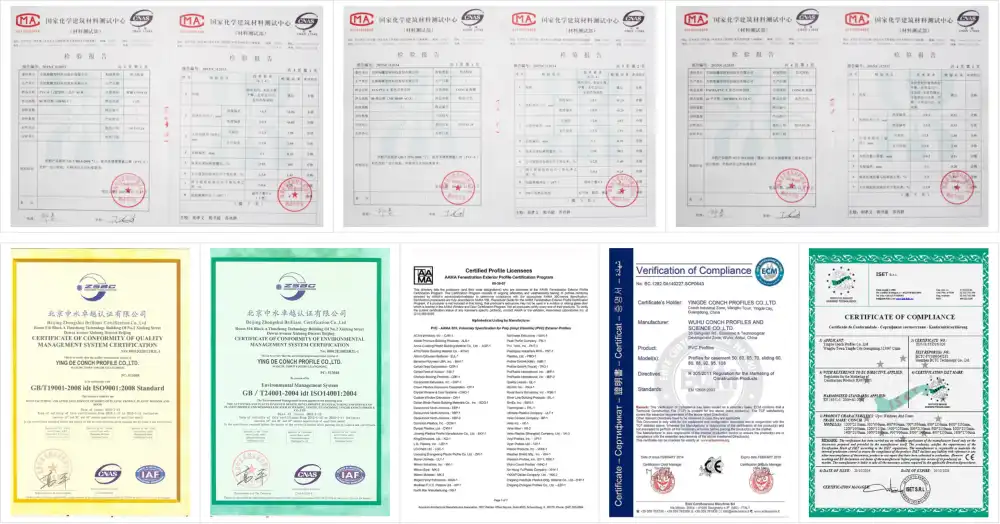
Haolv Building Materials Co., Ltd. stands as a professional China Aluminum Profiles manufacturer with over eighteen years of expertise delivering high-quality aluminum and UPVC windows and doors worldwide. Our advanced production facilities integrate extrusion, surface treatment, and automated assembly ensuring stable quality for both standard and Customized Aluminum Profiles orders. We offer comprehensive services including free technical consultation, customized design solutions, one-stop product support, and full project follow-up backed by ISO-certified quality management. As a trusted China Aluminum Profiles supplier and China Aluminum Profiles factory, we provide competitive wholesale Aluminum Profiles pricing, detailed Aluminum Profiles quotation, transparent Aluminum Profiles price lists, and Bulk Aluminum Profiles availability for projects of any scale. Contact us at kristin@haolvwindows.com for your Aluminum Profiles Pricelist and discover how our proven reliability serves customers across thirty-plus countries with 24-hour support.
References
1. Kaufman, J. Gilbert. "Introduction to Aluminum Alloys and Tempers." ASM International, 2000.
2. Starke, Edgar A., and Staley, John T. "Application of Modern Aluminum Alloys to Aircraft." Progress in Aerospace Sciences, Volume 32, Issues 2-3, 1996.
3. Granta Design Limited. "Materials for Energy Efficiency in Buildings." Cambridge Engineering Selector, 2010.
4. European Aluminium Association. "Aluminium in Buildings: An Introduction to Aluminium and Its Use in Construction." Brussels, 2018.
5. Kissell, J. Randolph, and Ferry, Robert L. "Aluminum Structures: A Guide to Their Specifications and Des

USER EVALUATE
Here is the customer's evaluation of us