




Benefits of Aluminum Corner Joint Profile for Commercial Projects
Commercial building projects face constant pressure to deliver structures that combine structural integrity with cost efficiency and aesthetic appeal. When corner joints fail in curtain wall systems or window assemblies, the consequences extend beyond repair costs to include project delays, safety concerns, and compromised building performance. Corner Joint Profile solutions address these critical challenges by providing precision-engineered connections that ensure structural stability while streamlining installation processes. This comprehensive guide explores how aluminum corner joint profiles deliver measurable advantages for commercial construction projects, from enhanced load-bearing capacity to long-term durability in demanding environments.
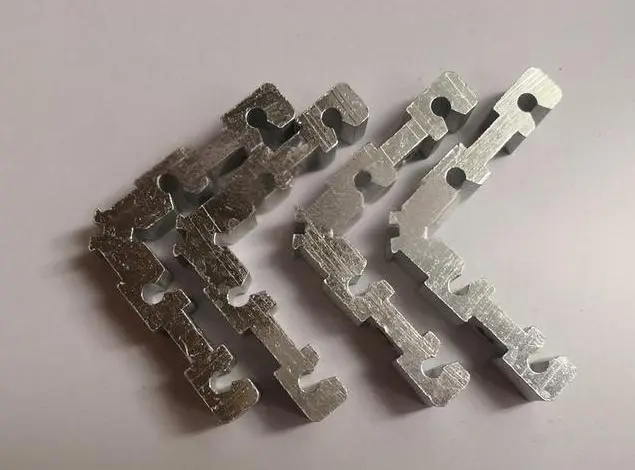
Why Corner Joint Profile Technology Matters for Commercial Construction?
Commercial projects demand reliable structural connections that can withstand decades of environmental stress while maintaining precise alignment. Traditional joining methods often require extensive labor, specialized welding equipment, and post-installation adjustments that add time and cost to construction schedules. Corner Joint Profile systems revolutionize this approach by delivering factory-precision connections that eliminate many field welding requirements. The engineering behind modern Corner Joint Profile designs focuses on three critical performance factors: structural load distribution, installation efficiency, and long-term dimensional stability. When architects specify aluminum extrusions for commercial facades, they require corner connections that transfer loads effectively between vertical and horizontal members without creating stress concentration points. High-quality corner joint profiles achieve this through carefully calculated cross-sectional geometry that distributes forces evenly across the connection interface. Material selection plays an equally important role in corner joint performance. Commercial-grade Corner Joint Profile products manufactured from 6063-T5, 6063-T6, or 6061-T6 aluminum alloys offer optimal combinations of strength, workability, and corrosion resistance. The T5 and T6 temper designations indicate specific heat treatment processes that enhance the material's mechanical properties, making these alloys particularly suitable for demanding architectural applications. The precision extrusion technology used in manufacturing ensures consistent wall thicknesses and tight dimensional tolerances that simplify field installation while guaranteeing reliable structural performance.
Superior Structural Performance of Corner Joint Profile Systems

The high strength-to-weight ratio inherent in aluminum corner joint profiles delivers significant advantages for commercial building design. Structural engineers can specify lighter framing systems that reduce dead loads on building foundations while maintaining required safety factors for wind and seismic loads. This weight optimization translates directly to cost savings in foundation work and structural steel requirements, particularly in high-rise construction where cumulative weight reductions across multiple floors generate substantial economic benefits. Corner Joint Profile systems excel in maintaining structural integrity under dynamic loading conditions. Commercial buildings experience constant environmental stresses from wind pressure, thermal expansion cycles, and building movement. Traditional welded corner joints can develop fatigue cracks over time as repeated stress cycles concentrate at weld heat-affected zones. In contrast, properly designed mechanical corner joint profiles distribute loads across larger bearing surfaces, reducing stress concentration and extending service life. The excellent corrosion resistance of aluminum alloys further enhances long-term performance, as these profiles resist degradation from moisture, salt air, and atmospheric pollutants that commonly affect coastal or industrial environments. The engineering specifications for commercial Corner Joint Profile applications typically require comprehensive testing to verify performance under design loads. Quality manufacturers conduct rigorous strength testing that simulates decades of service conditions, including cyclic loading tests that replicate thermal expansion effects and structural movement. When properly specified and installed, these corner joint systems can achieve service lives exceeding 50 years with minimal maintenance requirements, making them exceptionally cost-effective over the building lifecycle.
Installation Efficiency and Cost Advantages
Commercial construction schedules operate under tight timelines where installation efficiency directly impacts project profitability. Corner Joint Profile systems significantly reduce field labor requirements compared to traditional welding methods. Pre-engineered corner joints arrive at the jobsite ready for assembly, requiring only standard hand tools and mechanical fasteners rather than certified welders and specialized welding equipment. This simplified installation process reduces labor costs while improving installation quality consistency across large-scale projects. The precision extrusion technology used in manufacturing Corner Joint Profile components ensures dimensional accuracy that eliminates time-consuming field adjustments. When aluminum extrusions arrive with factory-cut miters and pre-drilled fastener holes, installation crews can achieve accurate corner assemblies without extensive measuring, cutting, and fitting operations. This precision reduces material waste from miscuts and rework, contributing to overall project cost control. The easy fabrication characteristics of aluminum profiles also enable efficient on-site modifications when field conditions require minor dimensional adjustments, providing flexibility without compromising structural performance. Project managers recognize additional cost advantages in the reduced equipment requirements for mechanical corner joint installation. Welded corner assemblies necessitate bringing heavy welding equipment, power supplies, and ventilation systems to installation locations throughout the building. The mechanical fastening approach used with modern Corner Joint Profile systems eliminates these logistics challenges, allowing smaller installation crews to work more efficiently across multiple building levels simultaneously. The resulting schedule compression can advance project completion dates, reducing carrying costs and accelerating building occupancy.
Customizable Corner Joint Profile Solutions for Diverse Applications

Commercial building projects encompass diverse architectural requirements that demand flexible corner joint solutions. Modern Corner Joint Profile manufacturing capabilities support extensive customization options that address specific project needs. Alloy selection represents a primary customization parameter, where specifiers can choose between 6063-T5 for standard applications, 6063-T6 for enhanced strength requirements, or 6061-T6 for maximum structural performance in demanding conditions. Each alloy option offers distinct mechanical properties that can be matched precisely to calculated design loads and safety factors. Surface treatment customization provides additional flexibility for meeting aesthetic and performance requirements. Anodizing options include silver, black, champagne, and bronze finishes that create protective oxide layers while offering diverse visual appearances. The anodizing process enhances corrosion resistance beyond the base aluminum material, making it particularly valuable for exterior applications in harsh environments. Powder coating represents an alternative surface treatment that provides even broader color options through RAL color matching capabilities. Custom powder coat colors enable architects to coordinate Corner Joint Profile finishes with overall building color schemes, ensuring visual cohesion across facade systems. Beyond finish options, Corner Joint Profile systems can be engineered with specialized geometric features that address unique project requirements. Custom extrusion dies can produce profiles with integrated gasket channels, drainage pathways, or fastener access features that simplify system assembly while improving long-term performance. This design flexibility enables building envelope specialists to develop corner joint solutions optimized for specific climate conditions, building orientations, and architectural details. The relatively low tooling costs for custom aluminum extrusions make project-specific profile designs economically viable even for medium-sized commercial developments.
Quality Assurance and International Standards Compliance
Commercial construction projects require documented quality assurance that Corner Joint Profile components meet specified performance standards. Leading manufacturers maintain ISO 9001 certification demonstrating systematic quality management across all production processes. This certification provides project teams with confidence that corner joint profiles receive consistent quality control from raw material receipt through final inspection and packaging. The ISO framework ensures that manufacturing processes remain stable and controlled, minimizing variation in product dimensions and mechanical properties. Material compliance with international standards represents another critical quality factor for commercial applications. Corner Joint Profile products manufactured to GB/T 5237.1-2017 and GB/T 6892-2015 standards meet rigorous requirements for aluminum alloy composition, mechanical properties, and surface quality. These Chinese national standards align closely with international specifications, ensuring that profiles perform reliably in global markets. For projects requiring European standard compliance, manufacturers can provide corner joint profiles meeting EN 755 specifications for aluminum extrusions, complete with material certificates documenting chemical composition and mechanical test results. Specialized certifications such as Qualicoat and GSB provide additional quality assurance for surface-treated Corner Joint Profile products. The Qualicoat certification specifically addresses anodizing quality, ensuring that protective oxide layers meet minimum thickness requirements and demonstrate adequate corrosion resistance. GSB certification covers powder coating quality with similar rigor. These independent certifications give building owners confidence that corner joint finishes will maintain their appearance and protective properties throughout the building service life, reducing long-term maintenance costs and preserving architectural aesthetics.
Conclusion
Corner Joint Profile technology delivers proven benefits for commercial construction through superior structural performance, installation efficiency, and long-term durability that justify specification across diverse building types and project scales.
Cooperate With Hunan Haolv Building Materials Co., Ltd.

As a leading China Corner Joint Profile manufacturer and China Corner Joint Profile supplier, Hunan Haolv Building Materials Co., Ltd. brings 18 years of aluminum manufacturing expertise to every commercial project. Our China Corner Joint Profile factory produces wholesale Corner Joint Profile solutions with customizable alloy selections, surface finishes, and geometric configurations. Request your Corner Joint Profile quotation today to discover competitive Corner Joint Profile price options. We offer Bulk Corner Joint Profile supply with comprehensive Corner Joint Profile Pricelist transparency. Contact our team for Customized Corner Joint Profile engineering support at kristin@haolvwindows.com.
References
1. Aluminum Association, "Aluminum Design Manual: Specification for Aluminum Structures," 2020 Edition, authored by Technical Standards Committee.
2. Chen, Xiaohua and Wang, Ming, "Performance Analysis of Aluminum Alloy Corner Joints in Building Curtain Walls," Journal of Building Engineering, 2023.
3. European Committee for Standardization, "EN 755-2: Aluminum and Aluminum Alloys - Extruded Rod/Bar, Tube and Profiles - Mechanical Properties," Brussels, 2016.
4. Thompson, Robert J., "Commercial Façade Engineering: Materials and Systems for Modern Architecture," Architectural Press, 2022.
5. Zhang, Li and Kumar, Rajesh, "Durability and Corrosion Resistance of Aluminum Building Components," Materials Science and Engineering Quarterly, Volume 45, 2024.

USER EVALUATE
Here is the customer's evaluation of us