




Aluminum Sliding Door Profile The Precision Component That Defines Performance
Every high‑quality sliding door begins with a well‑designed extrusion. The aluminum sliding door profile is the hidden hero – a precisely engineered shape that determines the door‘s strength, thermal efficiency, smooth operation, and weather resistance. Whether you are a manufacturer, architect, or homeowner, understanding profile features helps you select the right sliding door system. This comprehensive guide dives deep into the geometry, materials, and performance characteristics of aluminum sliding door profiles.
What Is an Aluminum Sliding Door Profile?
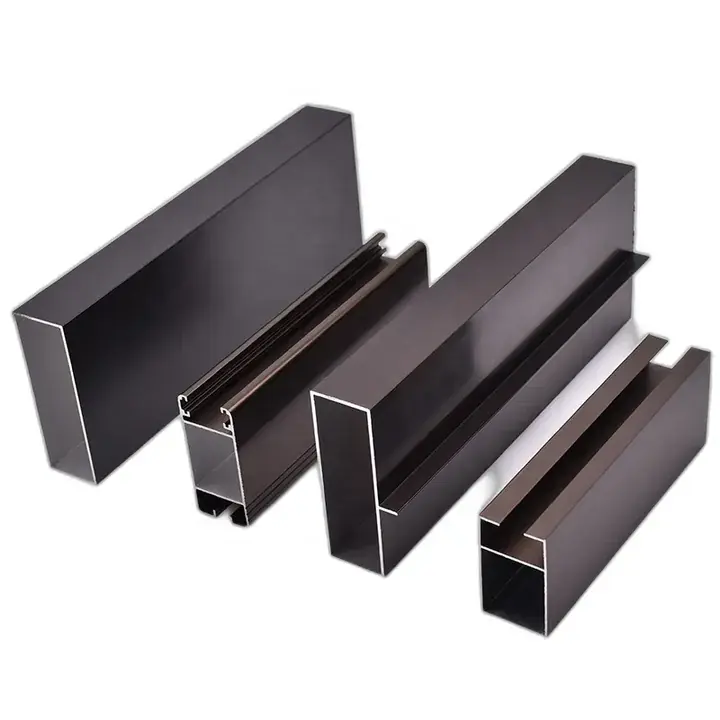
An aluminum sliding door profile is an extruded section of aluminium alloy (typically 6063‑T5 or 6061‑T6) that forms the frame, sliding panel, fixed panel, and track of a sliding door. Unlike simple square tubes, modern profiles incorporate complex multi‑chamber geometries, thermal breaks, gasket grooves, and reinforcement cavities.
The profile consists of several functional zones:
Main chambers: Hollow sections that provide structural rigidity and trap air for insulation.
Track area: Lower section with a stainless steel wear strip where rollers run.
Thermal break slot: A recess where a polyamide strip is inserted to separate interior and exterior aluminium.
Gasket grooves: Precision channels for EPDM bulb seals and brush seals.
Reinforcement cavities: Spaces for steel inserts to increase strength for large or heavy panels.
Weep holes: Small drainage openings to expel any water that enters the outer seal.
Key Design Features of Quality Aluminum Sliding Door Profiles
Wall thickness and alloy selection. Premium profiles have a minimum wall thickness of 1.8mm for the frame and 2.0‑2.5mm for the sliding sash. Thicker walls (up to 3.0mm) are used for commercial or high‑wind applications. 6063‑T5 offers good extrudability and corrosion resistance; 6061‑T6 provides higher strength.
Multi‑chamber geometry. A high‑performance sliding door profile has 3‑5 hollow chambers. More chambers improve thermal insulation and sound reduction. Asymmetrical chamber placement optimises strength without increasing weight.
Thermal break integration. For exterior doors, a polyamide strip (20‑40mm wide) is inserted after extrusion. The thermal break blocks conductive heat transfer. A 30mm thermal break typically achieves a whole‑door U‑value of 1.2‑1.8 W/m²K with double glazing. Non‑thermal break profiles are only suitable for interior or unheated spaces.
Track design. Bottom tracks are either low‑profile (10‑15mm) for flush thresholds or standard (30‑50mm) with stainless steel roller paths. Top‑hung systems use a concealed header track. Good profile design includes sloped channels to direct water outward via weep holes.
Seal and gasket grooves. Precision‑machined grooves hold EPDM bulb seals, silicone weather strips, or brush seals. Two‑line or three‑line sealing dramatically improves air and water tightness. The groove dimensions must be consistent to ensure uniform compression.
Reinforcement cavities. Rectangular or C‑shaped cavities accept steel reinforcement (1.5‑2.5mm thick) to prevent deflection under heavy glass (up to 200kg per sash). Steel is essential for large sliding doors.
Hardware integration. Profiles feature pre‑engineered pockets for multi‑point locking rods, roller carriages, anti‑lift blocks, and handle mounting. These pockets ensure secure, long‑lasting operation.
Performance Characteristics of Aluminum Sliding Door Profiles
Thermal performance (U‑value). Non‑thermal break: ~5.0 W/m²K. With 30mm thermal break and double glazing: 1.2‑1.8 W/m²K. With 40mm thermal break and triple glazing: below 1.0 W/m²K.
Structural strength (DP rating). Profiles can be engineered for DP‑40 (2,000 Pa), DP‑50 (2,500 Pa), or DP‑60 (3,000 Pa) design pressure. Thicker walls and steel reinforcement increase DP rating.
Air and water tightness. With proper seal design, air infiltration can be ≤0.1 cfm/ft², and water resistance up to 700 Pa (tested to ASTM E1105).
Durability. Aluminium profiles are naturally corrosion‑resistant. Powder coating (AAMA 2604 or 2605) provides additional protection against UV, salt spray, and abrasion. Service life exceeds 40 years.
Applications for Aluminum Sliding Door Profiles
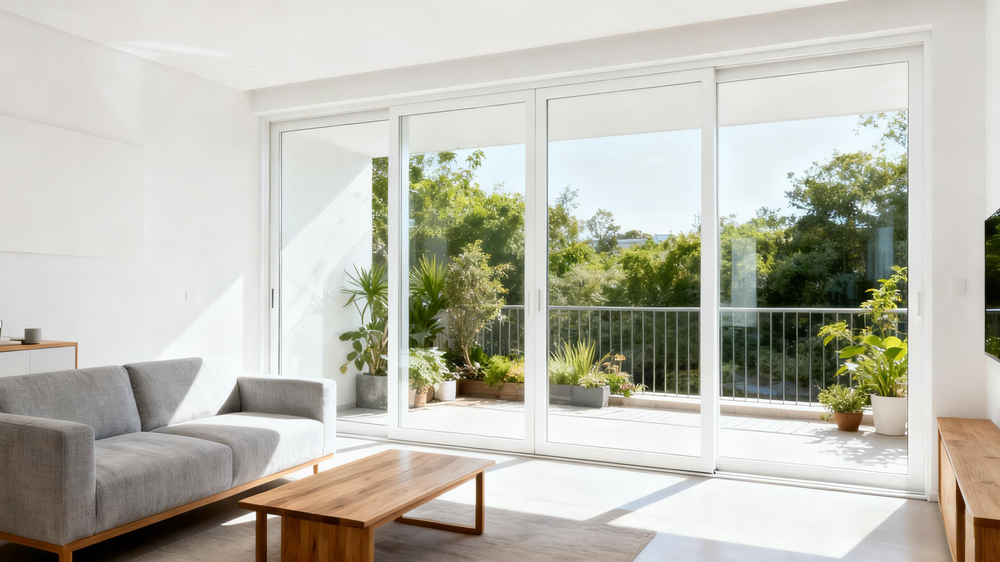
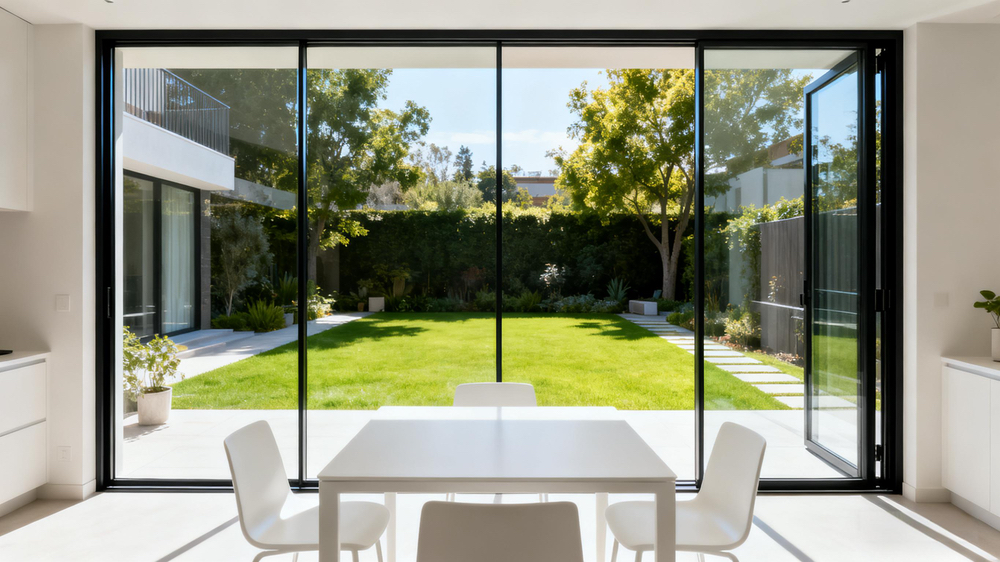
Residential sliding doors – patio, balcony, and terrace doors.
Commercial storefronts – retail sliding doors, hotel entrances.
High‑rise buildings – balcony sliding doors with high wind load requirements.
Industrial and office partitions – interior sliding doors (non‑thermal break profiles suffice).
Frequently Asked Questions About Aluminum Sliding Door Profiles
Q: What is the difference between 6063‑T5 and 6061‑T6 aluminium?
A: 6063‑T5 is the standard for architectural extrusions – good strength, excellent corrosion resistance, and very good extrudability. 6061‑T6 is stronger but harder to extrude, used for heavy‑duty or high‑wind applications. For most residential sliding doors, 6063‑T5 is sufficient.
Q: How do I choose between a bottom‑rolling and top‑hung profile?
A: Bottom‑rolling (the door rides on a lower track) is more common, easier to seal, and supports more weight. Top‑hung (door hangs from an upper track) allows a flush, step‑free threshold but requires a stronger header structure. Choose based on threshold preference and structural constraints.
Q: What is the typical width of a thermal break?
A: For residential sliding doors, 30mm is common, giving U‑values around 1.4‑1.8 W/m²K. For Passive House or very cold climates, 40‑50mm thermal breaks are used. For mild climates, 20mm may be acceptable.
Q: Can I order custom lengths of aluminum sliding door profiles?
A: Yes. Most manufacturers supply profiles in custom lengths up to 6‑7 metres (longer on request). Profiles are cut to your specified dimensions before assembly. Always order slightly longer for cutting allowance.
Q: How do I identify a quality profile from a cheap one?
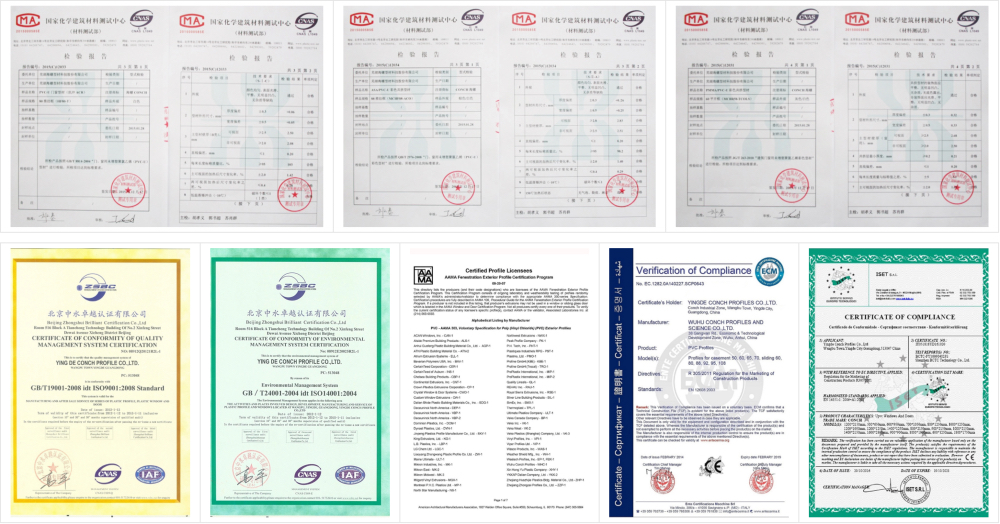
A: Check wall thickness (minimum 1.8mm). Look for uniform extrusion, sharp internal corners, no voids. Weigh a metre length – quality profiles feel solid. Ask for certification (ISO 9001, AAMA). Avoid profiles with visible die lines or inconsistent anodising.
Selection and Specification Tips
When specifying an aluminum sliding door profile, define the required DP rating (wind load), U‑value (thermal performance), glass weight, and threshold type. Request mill certificates for alloy and temper. For coastal projects, specify AAMA 2605 powder coating and stainless steel hardware. Always test a mock‑up for air and water performance before full production.
Conclusion
The aluminum sliding door profile is the engineered backbone of every smooth‑sliding, energy‑efficient, and durable sliding door. From multi‑chamber thermal break designs to precision gasket grooves and steel reinforcement cavities, every feature contributes to real‑world performance. Understanding these profiles empowers you to specify or select a sliding door system that will perform flawlessly for decades.
Cooperate With Hunan Haolv Building Materials Co., Ltd.
As a leading manufacturer of high‑performance aluminium extrusion systems, Hunan Haolv Building Materials Co., Ltd. brings over eighteen years of specialised expertise to the production of aluminum sliding door profiles. Our profiles are extruded from premium 6063‑T5 aluminium with multi‑chamber designs (3‑5 chambers), 30‑50mm polyamide thermal breaks, and precision gasket grooves. We offer any RAL powder‑coated finish, custom lengths up to 7 metres, and steel reinforcement options. Every profile undergoes rigorous ISO‑certified quality management. For detailed quotations, pricelist information, or to discuss your specific profile requirements, please contact us today at kristin@haolvwindows.com.

USER EVALUATE
Here is the customer's evaluation of us