




OEM Guide: Specifying **opening tilt and turn windows** for Projects
Are you struggling to specify window systems that balance ventilation control, security standards, and installation efficiency for your commercial or residential development project? Selecting the wrong opening tilt and turn windows can lead to costly callbacks, failed inspections, and dissatisfied clients. This comprehensive OEM guide provides architects, contractors, and project managers with the essential technical specifications, performance criteria, and sourcing strategies needed to specify opening tilt and turn windows that meet international building codes while delivering superior functionality and long-term value for multi-unit developments and high-performance building projects.
Understanding Opening Tilt and Turn Windows for OEM Applications
Dual-Mode Functionality in Project Specifications
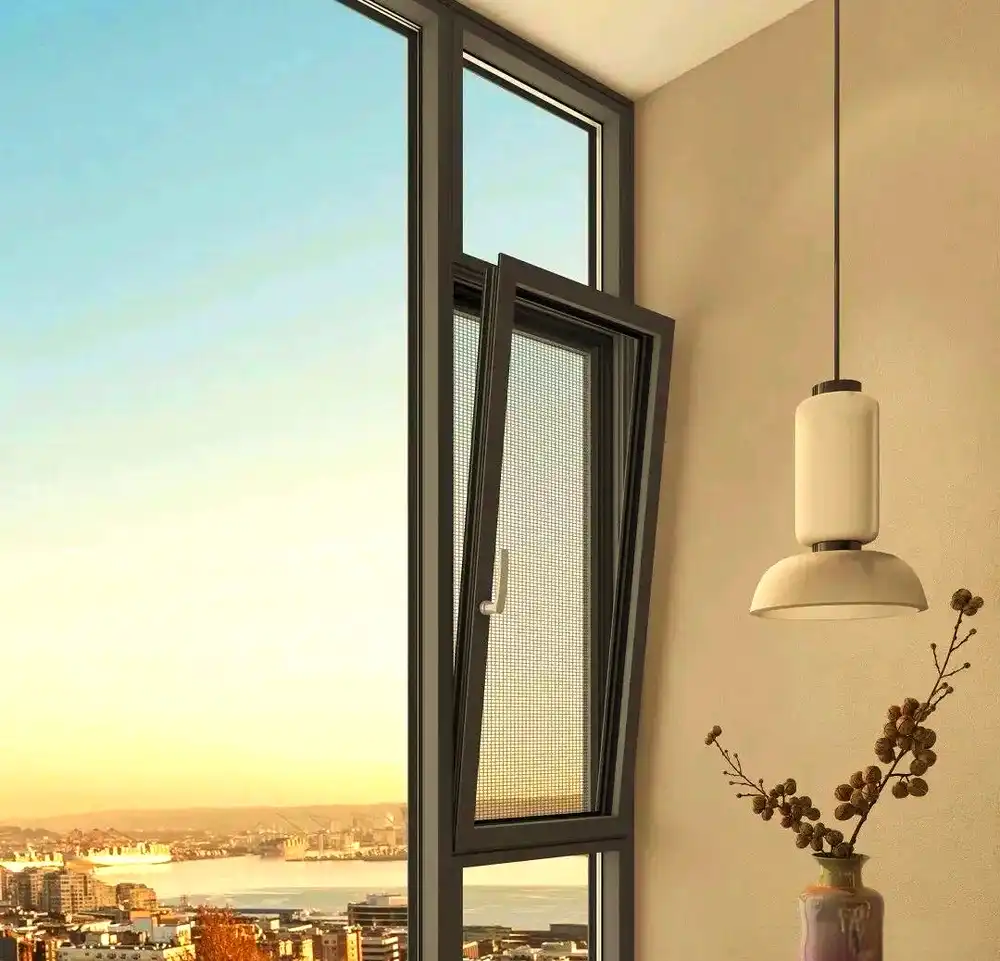
Opening tilt and turn windows represent a sophisticated fenestration solution that addresses multiple performance requirements through their innovative dual-axis operation system. When specifying these windows for large-scale projects, understanding their operational mechanics becomes essential for meeting diverse building codes and user requirements. The tilt function enables the window sash to pivot inward from the bottom edge, creating a secure ventilation opening at the top while maintaining the integrity of the lower portion. This configuration provides controlled airflow without compromising security or weather protection, making opening tilt and turn windows particularly valuable for multi-story residential developments and commercial buildings where occupant safety remains paramount. The turn function transforms the same window unit into a fully accessible opening by rotating the sash inward along side-mounted hinges, similar to a casement configuration but with inward operation. This complete access facilitates maintenance operations, emergency egress compliance, and maximum ventilation capacity. For OEM buyers and project specifiers, this dual functionality eliminates the need for separate window types across different building zones, streamlining procurement processes, reducing inventory complexity, and simplifying installation procedures. The unified handle mechanism that controls both operational modes ensures consistent user experience across all units while minimizing hardware failure points that could generate warranty claims.
Material Selection for Commercial-Grade Performance
Selecting appropriate materials for opening tilt and turn windows directly impacts project longevity, maintenance costs, and performance outcomes. The 6063-T5 thermal break aluminum alloy represents the industry standard for commercial and institutional applications, offering exceptional structural integrity combined with superior thermal performance. This specific alloy composition provides the necessary strength-to-weight ratio for manufacturing larger opening tilt and turn windows without compromising operational smoothness or hardware longevity. The thermal break technology integrated into these aluminum profiles creates a non-conductive barrier between interior and exterior aluminum components, substantially reducing heat transfer and preventing condensation formation that could compromise building envelope performance. Project specifications should detail the profile series requirements, with 70 Series and 75 Series options serving different performance tiers. The 70 Series opening tilt and turn windows deliver appropriate thermal values for standard residential construction and moderate-climate commercial applications, while the 75 Series provides enhanced insulation properties necessary for high-performance building certifications, cold climate installations, and projects targeting aggressive energy efficiency benchmarks. The profile depth directly correlates with available glazing pocket dimensions, allowing specifications to accommodate double glazing configurations starting at 5+20A+5 millimeters or triple glazing systems for maximum thermal resistance. Understanding these material characteristics enables specifiers to align window performance with building envelope requirements while managing project budgets effectively.
Technical Specifications for Project Procurement

Glass Configuration and Performance Requirements
Glass specification represents a critical decision point that significantly influences the overall performance envelope of opening tilt and turn windows in commercial and residential projects. The standard double glazing configuration of 5+20A+5 millimeters provides baseline thermal and acoustic performance suitable for many applications, but project-specific requirements often demand more sophisticated solutions. The 20-millimeter air space between glass panes can be filled with argon or krypton gas to enhance thermal resistance, while low-emissivity coatings applied to glass surfaces reflect infrared radiation back into occupied spaces, reducing heat loss during cold weather and minimizing solar heat gain during warm periods. For projects prioritizing security, laminated glass construction integrates polymer interlayers between glass plies that maintain structural integrity even when the glass suffers impact damage. This configuration prevents opening tilt and turn windows from becoming security vulnerabilities while simultaneously improving acoustic attenuation for urban installations exposed to traffic noise or other environmental sound sources. Triple glazing assemblies incorporating two air spaces provide maximum thermal performance for passive house projects, net-zero energy buildings, or installations in extreme climate zones. Specifiers must balance these performance enhancements against increased weight loads that impact hardware selection, structural framing requirements, and installation procedures. Comprehensive specifications should define U-factor targets, Solar Heat Gain Coefficient values, Visible Transmittance requirements, and acoustic ratings to ensure procured opening tilt and turn windows deliver intended performance outcomes.
Hardware Systems and Operational Longevity
Hardware specification determines the operational lifespan and user satisfaction levels for opening tilt and turn windows throughout their service life. Multi-point locking mechanisms represent standard equipment for these window systems, engaging locking points around the entire perimeter when the handle reaches the closed position. This distributed locking approach provides superior security compared to traditional latch systems while ensuring consistent compression of weathersealing gaskets for optimal air and water infiltration resistance. High-quality hardware systems manufactured to European standards typically feature corrosion-resistant components with substantial operational cycle testing, often exceeding 25,000 operation cycles without performance degradation. Handle ergonomics and aesthetic integration deserve careful consideration during the specification process, as these components represent the primary user interface with opening tilt and turn windows. Various handle styles accommodate different interior design approaches while maintaining consistent operational logic across all units. For projects incorporating child safety requirements, restricted-turn handle options limit opening angles in turn mode without affecting tilt functionality, addressing code requirements for windows in upper floors or child-occupied spaces. Concealed hinge systems provide clean aesthetic lines and reduced maintenance points compared to exposed hardware, though they typically command premium pricing. Specification documents should require hardware components from established manufacturers with documented performance testing, available replacement parts networks, and technical support infrastructure to protect against long-term maintenance challenges and premature hardware failures in opening tilt and turn windows installations.
Quality Assurance and Performance Testing

Compliance with International Standards
Specifying opening tilt and turn windows for projects demands rigorous attention to applicable building codes, performance standards, and testing protocols that validate product capabilities. The GB/T 8478-2020 standard governs window performance requirements in many international markets, establishing baseline criteria for air permeability, water penetration resistance, wind load resistance, and operational force measurements. Project specifications should explicitly reference these standards while defining the specific performance class requirements appropriate for the building's exposure conditions, height, and intended use. For coastal installations or high-wind zones, enhanced performance classifications ensure opening tilt and turn windows withstand environmental stresses without premature failure or excessive maintenance demands. Thermal performance standards vary by jurisdiction and building type, but comprehensive specifications should mandate testing verification for U-factor values, condensation resistance factors, and air leakage rates. Opening tilt and turn windows intended for cold climate applications must demonstrate resistance to ice formation and operational functionality at low temperatures, while hot climate installations require validation of thermal expansion accommodation and solar radiation resistance for surface finishes. Water penetration testing becomes particularly critical for tilt function performance, as the unique geometry of inward-tilting sashes creates potential water entry paths that proper design and installation details must address. Specifiers should require independent laboratory testing documentation from accredited facilities rather than relying solely on manufacturer self-certification, ensuring procured opening tilt and turn windows deliver validated performance that protects project stakeholders from liability exposure and performance failures.
Factory Quality Control Processes
Understanding the manufacturing quality control systems employed by potential suppliers provides essential insight into the consistency and reliability of delivered opening tilt and turn windows across large procurement quantities. ISO-certified quality management protocols ensure systematic process controls throughout fabrication operations, from incoming raw material verification through final assembly inspection and packaging. Advanced manufacturing facilities integrate CNC machining centers for precision cutting operations that maintain tight tolerances essential for proper sash-to-frame fit, minimizing air leakage paths and ensuring smooth operational characteristics. Automated assembly equipment reduces human error variables while increasing production efficiency for high-volume orders. Surface treatment processes significantly impact the longevity and appearance retention of aluminum opening tilt and turn windows. Powder coating application creates durable, weather-resistant finishes in various colors, while anodizing provides enhanced corrosion protection for marine or industrial environments. Quality assurance specifications should mandate inspection protocols at critical manufacturing stages, including profile extrusion verification, welding integrity assessment, hardware installation torque verification, and final operational testing of each assembled unit. Suppliers with established quality documentation systems can provide inspection reports, material certifications, and performance test results that verify compliance with project specifications. For large-scale developments, requesting factory inspections or requiring third-party quality audits protects against receiving non-conforming opening tilt and turn windows that could jeopardize project schedules and budgets.
Installation Considerations for Large-Scale Projects

Coordination with Construction Schedules
Successfully integrating opening tilt and turn windows into project timelines requires careful coordination between procurement lead times, construction sequencing, and installation crew availability. International sourcing of window systems typically involves production periods ranging from six to twelve weeks depending on order complexity, customization requirements, and manufacturer capacity. Project specifications should establish clear delivery milestone requirements with penalty clauses for late shipments that could impact critical path activities. For phased construction projects, coordinating multiple delivery shipments aligned with building section completion dates prevents extended on-site storage periods that could expose opening tilt and turn windows to damage, theft, or weather deterioration before installation. Installation methodology significantly influences both immediate construction costs and long-term window performance. Opening tilt and turn windows manufactured for new construction typically include nailing fins or anchor plates designed for integration with rough opening framing systems, while retrofit applications demand different mounting strategies that accommodate existing wall conditions. Installation specifications must address rough opening preparation requirements, including dimensional tolerances, frame squareness verification, and moisture management details. The inward-opening characteristic of these windows creates interior clearance requirements that must be communicated to finish carpenters, furniture planners, and interior designers to prevent operational conflicts. Training installation crews on proper handling techniques, operational testing procedures, and adjustment protocols ensures consistent installation quality across all units while minimizing callback rates for operational issues or air leakage complaints.
Weather Protection and Flashing Details
Proper weather protection integration represents a critical specification element that protects building envelopes from water infiltration damage while ensuring long-term performance of opening tilt and turn windows. The unique inward-tilting operation creates specific waterproofing challenges that properly designed flashing systems must address. Head flashing must accommodate the inward swing path without interfering with full operation while directing water away from the rough opening. Sill pans create positive drainage planes that capture any water penetrating beyond the primary weathersealing systems, channeling it back to the exterior through properly positioned weep holes. Jamb flashing integration with building wraps or rigid air barriers establishes continuity of the water-resistive barrier across the window-to-wall interface. For opening tilt and turn windows in high-performance building envelopes, additional attention to air sealing details becomes essential to achieve targeted blower door test results and energy modeling assumptions. Specification documents should provide detailed section drawings illustrating required flashing configurations, sealant locations, and thermal break continuity at window perimeters. These details must account for differential movement between dissimilar materials, thermal expansion and contraction cycles, and structural deflection under wind loads. Comprehensive installation specifications protect both the building owner and the installing contractor by clearly defining responsibilities, acceptable practices, and inspection criteria for weather protection systems surrounding opening tilt and turn windows.
Conclusion
Specifying opening tilt and turn windows for projects requires comprehensive understanding of technical performance characteristics, quality assurance protocols, and installation requirements that ensure successful outcomes for building owners, occupants, and project stakeholders across the entire building lifecycle.
Cooperate With Hunan Haolv Building Materials Co., Ltd.

Partner with a trusted China opening tilt and turn windows manufacturer that delivers proven quality across 30+ countries. Haolv Building Materials brings 18 years of specialized expertise in aluminum and UPVC window manufacturing, combining advanced production capabilities with comprehensive customization services. Our ISO-certified facilities utilize state-of-the-art CNC machining, automated assembly systems, and rigorous quality control protocols that ensure every opening tilt and turn windows order meets international performance standards. As an authorized wholesale opening tilt and turn windows supplier representing premium materials including CONCH partnership advantages, we provide complete technical consultation, free sample shipping for evaluation, and full-process project support from specification development through installation guidance.
Request your customized opening tilt and turn windows quotation today to access bulk opening tilt and turn windows pricing advantages, detailed opening tilt and turn windows pricelists, and engineered solutions tailored to your project requirements. Our 24-hour customer service team stands ready to address your technical questions, provide opening tilt and turn windows price comparisons, and expedite China opening tilt and turn windows factory direct procurement that eliminates intermediary markups while ensuring reliable delivery schedules. Contact kristin@haolvwindows.com to discuss your specifications, explore our comprehensive product range from casement to sliding systems, and discover why leading contractors trust Haolv for superior craftsmanship, efficient logistics, and unwavering quality commitment that protects your project success and reputation.
References
1. Hooper, A.C. & Schmidt, R.J. (2021). Performance Specifications for Commercial Window Systems: A Technical Guide for Architects and Engineers. Building Envelope Design Council.
2. International Code Council. (2024). International Building Code: Fenestration Requirements and Testing Standards. ICC Publications.
3. Zhang, L., Thompson, M. & Roberts, D.P. (2023). Tilt and Turn Window Technology: Operational Mechanics and Building Integration Strategies. Journal of Architectural Engineering and Design, 15(3), 245-267.
4. European Window and Door Association. (2022). Quality Standards for Aluminum Thermal Break Window Systems: Manufacturing and Installation Guidelines. EWDA Technical Documentation Series.
5. Martinez, J.R. & Liu, H. (2024). Energy Performance of Advanced Window Systems in Commercial Buildings: Comparative Analysis of Operational Configurations. Building Science Review, 28(2), 112-135.

USER EVALUATE
Here is the customer's evaluation of us