




UPVC ENERGY STAR Casement Windows Your Guide to Maximum Home Energy Efficiency
For homeowners seeking to reduce energy bills, improve indoor comfort, and minimize environmental impact, few investments deliver returns as reliably as UPVC ENERGY STAR casement windows. Combining the exceptional thermal insulation of multi-chambered UPVC profiles with the rigorous performance standards of ENERGY STAR certification, these windows represent the gold standard in residential fenestration. But what exactly does ENERGY STAR certification mean for a casement window, and how much can you really save? This comprehensive guide explores everything you need to know about UPVC ENERGY STAR casement windows—from certification requirements and performance metrics to selection criteria and long-term value.

Understanding UPVC ENERGY STAR Casement Windows
A UPVC ENERGY STAR casement window is a hinged window manufactured from unplasticized polyvinyl chloride (UPVC) that has been independently certified to meet the strict energy efficiency guidelines established by the U.S. Environmental Protection Agency (EPA) and the Department of Energy (DOE). The casement design features a sash hinged on the side that swings outward, creating an exceptionally tight seal when closed due to compression against a continuous gasket.
The UPVC frame is extruded from multi-chambered profiles that trap air, creating a natural thermal barrier. Unlike standard windows that may allow significant heat transfer, UPVC ENERGY STAR casement windows incorporate advanced glazing options including double or triple glazing, low-emissivity (Low-E) coatings, and inert gas fills (argon or krypton) between panes. These features work together to achieve the demanding U-factor and Solar Heat Gain Coefficient (SHGC) targets required for ENERGY STAR certification.
In 2026, ENERGY STAR Version 7.0 standards took effect, introducing more stringent requirements across all climate zones. For Northern climate zones, windows must now achieve a U-factor of 0.22 or lower—a significant tightening from previous standards. To meet these demanding specifications, manufacturers increasingly rely on triple-pane glass configurations combined with advanced UPVC frame designs.
Key Performance Metrics for ENERGY STAR Certification

To earn the ENERGY STAR label, windows must meet climate-specific performance criteria measured by the National Fenestration Rating Council (NFRC). The two most critical metrics are:
U-Factor (Thermal Transmittance): This measures how well a window prevents heat from escaping. Lower U-factors indicate better insulating performance. For ENERGY STAR certification, Northern climate zones require U-factors of 0.22 or lower under Version 7.0 standards. High-performance UPVC ENERGY STAR casement windows can achieve U-factors as low as 0.16 to 0.21 Btu/h·ft²·°F with triple glazing and advanced Low-E coatings.
Solar Heat Gain Coefficient (SHGC): This measures how much solar radiation passes through the window. Lower SHGC values reduce heat gain in summer, while higher values can provide passive solar heating in winter. ENERGY STAR requirements vary by climate zone: cold climates may allow higher SHGC for solar gain, while hot climates require lower SHGC to reduce cooling loads.
Air Leakage (AL): ENERGY STAR requires air leakage of 0.3 cfm/ft² or less. The casement design inherently achieves superior airtightness because the sash compresses against the frame gasket, creating a seal that sliding or single-hung windows cannot match.
Condensation Resistance (CR): This measures the window‘s ability to resist moisture formation on interior surfaces. Higher CR values are particularly valuable in humid climates or homes with high indoor moisture levels.
Key Advantages of UPVC ENERGY STAR Casement Windows
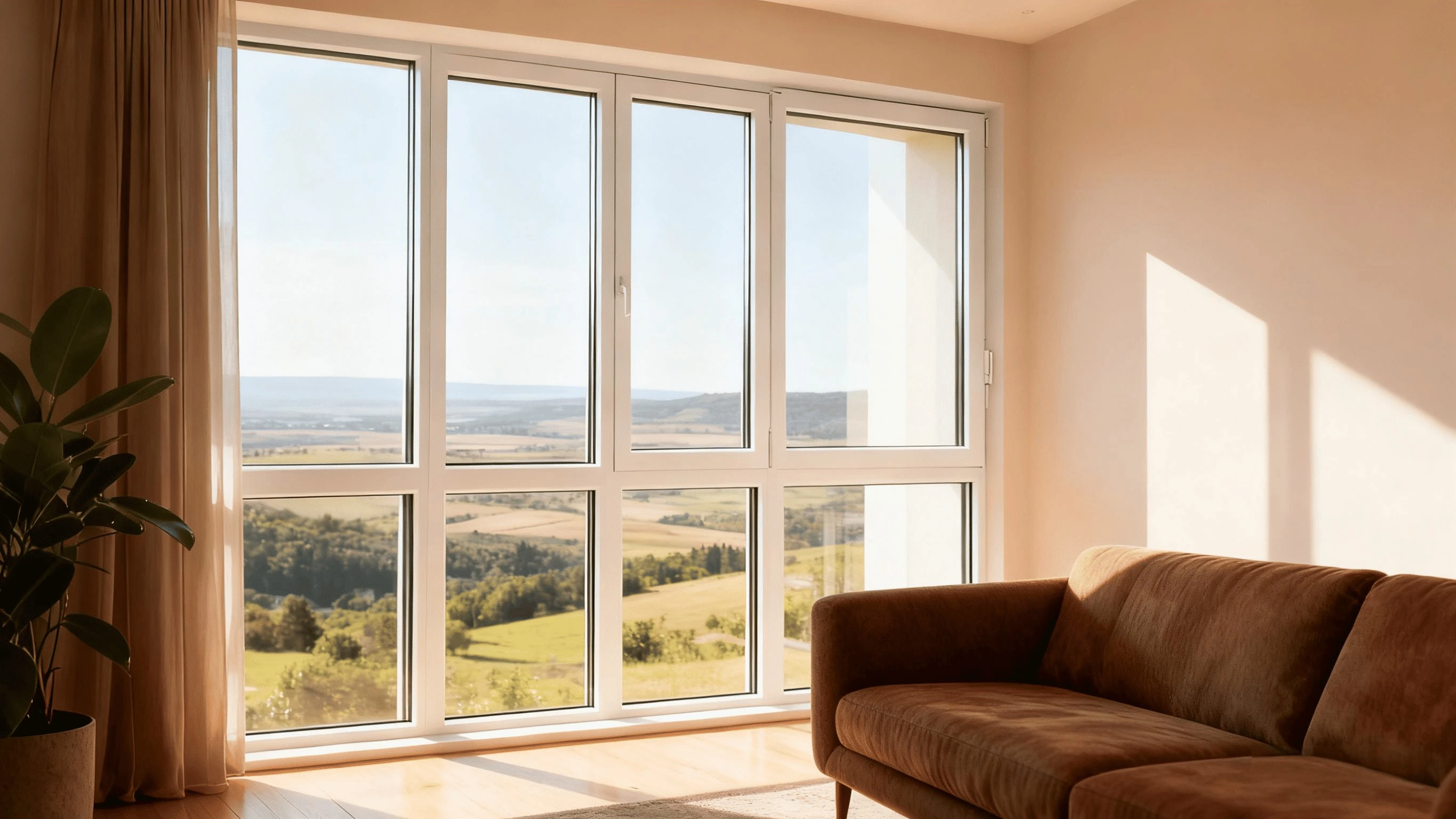
Substantial energy savings are the most compelling reason to choose UPVC ENERGY STAR casement windows. Replacing old single-pane windows with ENERGY STAR certified models can reduce annual energy bills by 7 to 15 percent, saving homeowners between $125 and $583 per year depending on climate and utility rates. Over a 10-year period, these savings can exceed $3,000 to $6,000, making the investment highly cost-effective.
Federal tax credits and incentives further improve the return on investment. In 2026, homeowners can claim a tax credit covering 30 percent of qualified energy-efficient window costs, up to $600 per year, for products meeting ENERGY STAR Most Efficient criteria with U-factors of 0.20 or below. Many states and utilities offer additional rebates for ENERGY STAR certified window installations.
Year-round comfort is dramatically improved. Low U-factors keep warm air inside during winter, while Low-E coatings reflect solar heat away in summer. This reduces cold drafts near windows and eliminates hot spots, creating consistently comfortable indoor temperatures throughout the home.
Noise reduction is an often-overlooked benefit of ENERGY STAR windows. The combination of multiple glass panes, gas fills, and tight seals significantly dampens external noise from traffic, aircraft, and neighborhood activities. UPVC ENERGY STAR casement windows can reduce outside noise by 25 to 35 decibels, creating quieter, more peaceful interiors.
Condensation control prevents moisture damage. The superior thermal performance keeps interior glass surfaces closer to room temperature, virtually eliminating condensation that can lead to mold growth and damage to window frames and surrounding walls.
Environmental impact is reduced through lower energy consumption. The average home can reduce its carbon footprint by approximately 2,000 to 6,000 pounds of CO2 annually when upgrading to ENERGY STAR certified windows.
Glass and Hardware Options for UPVC ENERGY STAR Casement Windows

Glass configurations directly determine ENERGY STAR qualification:
Double glazing (5mm+20A+5mm): Standard for moderate climates, with Low-E coating and argon gas fill achieving U-factors around 0.26-0.30.
Triple glazing (5mm+12A+5mm+12A+5mm): Required for Northern climate zones under Version 7.0 standards, achieving U-factors of 0.20-0.22 or lower.
Low-E coatings: Multiple tiers available (single, double, or triple silver) offering different balances of solar heat gain and visible light transmission. Double and triple silver Low-E coatings provide superior solar control while maintaining high visible transmittance.
Krypton gas fill: For ultra-high performance applications, krypton gas between panes provides better insulation than argon, especially in narrower gap spaces.
Warm-edge spacers: Non-metal spacers between glass panes reduce heat transfer at the glass edge, improving overall U-factor by 5-10 percent.
Hardware specifications for ENERGY STAR certified windows:
Multi-point locking systems: Typically 3 to 5 locking points with stainless steel components that compress the sash against the frame for airtight sealing.
EPDM or silicone gaskets: Continuous perimeter seals that maintain flexibility and sealing performance across wide temperature ranges.
Stainless steel friction hinges: Allow smooth opening and hold the sash at desired positions; rated for 20,000+ cycles.
Low-profile handles: Flush or recessed designs that maintain clean aesthetics while providing ergonomic operation.
Applications for UPVC ENERGY STAR Casement Windows

Residential homes benefit most from ENERGY STAR certified windows. They are ideal for:
Living rooms and great rooms: Where large glass areas maximize views and natural light while maintaining energy efficiency.
Bedrooms: Where noise reduction, comfort, and security are priorities.
Kitchens: Where easy operation for ventilation and easy-to-clean surfaces are valued.
Home offices and studios: Where consistent temperature and reduced outside noise enhance productivity.
New construction projects increasingly specify ENERGY STAR windows to meet building codes and green building certifications such as LEED, ENERGY STAR Certified Homes, and Passive House standards.
Renovation and retrofit projects benefit from the dramatic performance improvement over old single-pane or double-pane windows. Many states have adopted building codes requiring ENERGY STAR compliance for replacement windows.
Multi-family buildings including apartments and condominiums specify ENERGY STAR windows to reduce energy costs for residents and building owners while complying with increasingly stringent energy codes.
Frequently Asked Questions About UPVC ENERGY STAR Casement Windows
Q: What is the difference between ENERGY STAR and ENERGY STAR Most Efficient?
A: ENERGY STAR Most Efficient is a higher tier designation for products that demonstrate exceptional performance beyond standard ENERGY STAR requirements. For windows, this typically means U-factors of 0.20 or lower, qualifying for the federal tax credit in 2026.
Q: How much can I save annually with ENERGY STAR certified casement windows?
A: Savings vary by climate, existing window condition, and energy prices. According to Department of Energy data, replacing single-pane windows with ENERGY STAR certified models saves $125 to $583 annually, with typical homes seeing 7-15 percent reduction in energy bills.
Q: Are UPVC casement windows eligible for ENERGY STAR certification?
A: Yes, UPVC casement windows are eligible and are among the most common window types achieving ENERGY STAR certification due to their inherent thermal efficiency and excellent sealing characteristics.
Q: Do I need triple glazing to meet 2026 ENERGY STAR standards?
A: In Northern climate zones, triple glazing is strongly recommended and often necessary to achieve the Version 7.0 U-factor requirement of 0.22 or lower. In Southern climate zones, double glazing with Low-E coatings may be sufficient.
Q: What is the typical payback period for ENERGY STAR casement windows?
A: Depending on energy costs and installation expenses, payback periods typically range from 5 to 10 years. When combined with tax credits and rebates, the payback period can be significantly shorter. Windows also increase home value, with studies showing 70-80 percent ROI on window replacement projects.
Installation and Long-Term Value

Proper installation is critical for UPVC ENERGY STAR casement windows to achieve their rated performance. Even the most energy-efficient window will underperform if gaps around the frame are not properly sealed, or if flashing and insulation are incorrectly installed. Professional installation ensures that the frame is square, level, and properly anchored, and that all perimeter seals are continuous and uncompressed.
For property owners, the long-term value of investing in ENERGY STAR certified casement windows extends beyond energy savings. Increased property value, enhanced comfort, reduced noise, improved security, and lower environmental impact provide compelling returns. With proper care—periodic cleaning of frames and glass, annual lubrication of hinges and locks, and inspection of weather seals—these windows will perform reliably for 30 years or more.
Conclusion
UPVC ENERGY STAR casement windows represent the pinnacle of residential window performance. Combining the natural thermal efficiency of UPVC with the rigorous certification standards of ENERGY STAR, these windows deliver substantial energy savings, year-round comfort, noise reduction, and environmental benefits. With 2026 Version 7.0 standards raising the bar for energy efficiency, there has never been a better time to upgrade to ENERGY STAR certified casement windows.
Cooperate With Hunan Haolv Building Materials Co., Ltd.

As a leading manufacturer of high-performance window systems, Hunan Haolv Building Materials Co., Ltd. brings over eighteen years of specialized expertise to the production of UPVC ENERGY STAR casement windows. Our windows are manufactured using premium virgin UPVC material with multi-chamber profiles, triple glazing options, Low-E coatings, and stainless steel hardware. We design our products to meet the most demanding ENERGY STAR Version 7.0 requirements for Northern and Southern climate zones. Every product undergoes rigorous ISO-certified quality management from raw material selection through final inspection. For detailed quotations, pricelist information, or to discuss your specific project requirements, please contact us today at kristin@haolvwindows.com.

USER EVALUATE
Here is the customer's evaluation of us